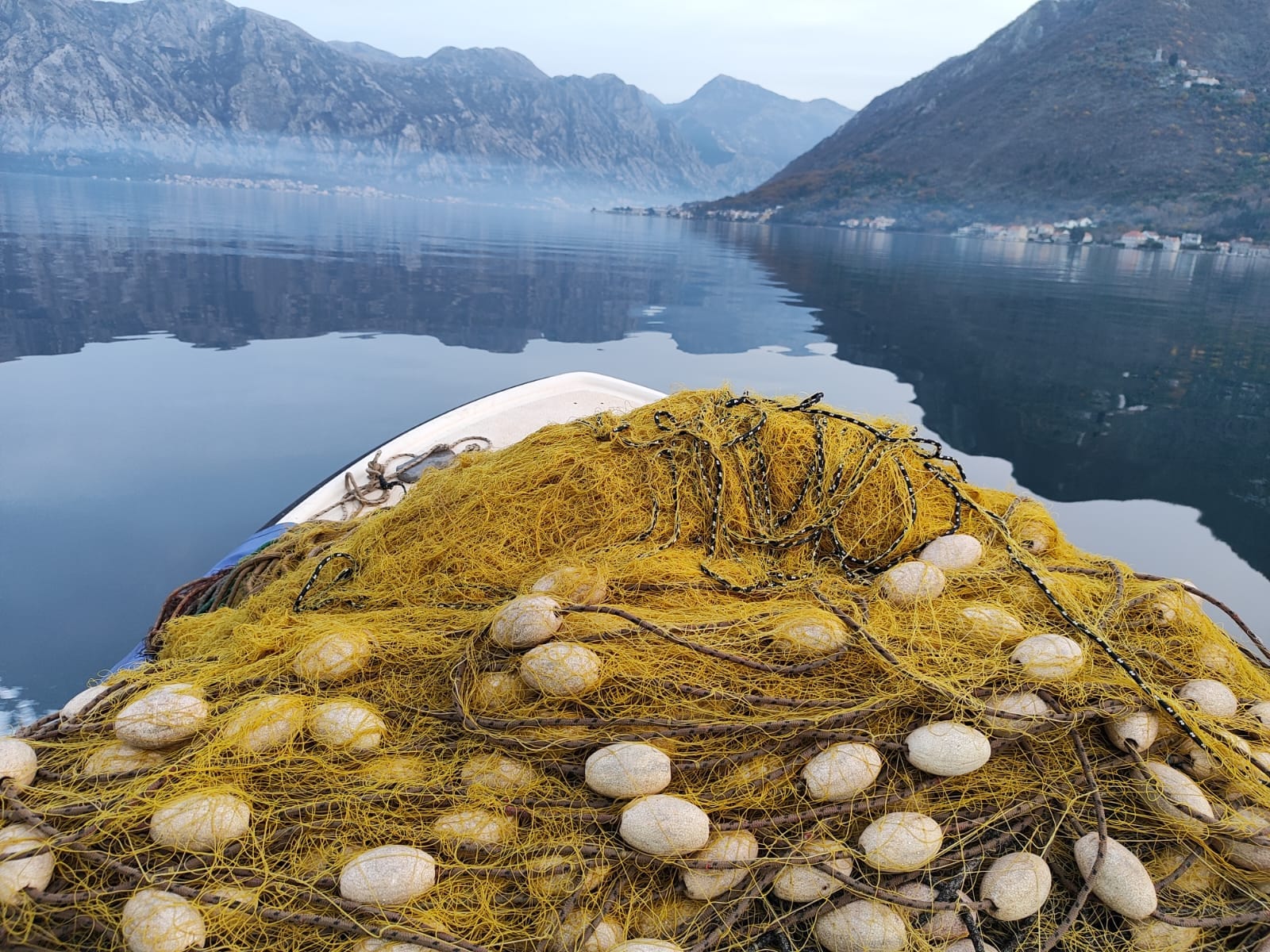
Trammel net fishing is one of the most effective traditional methods for catching fish that move close to the seabed. Although the net looks simple at first glance, its design is surprisingly sophisticated. A trammel net consists of three separate mesh layers that create pockets where fish become entangled and cannot escape.
Today, this net remains a key tool in professional coastal fisheries, while being strictly regulated or prohibited in recreational fishing due to its very high efficiency.
What Is a Trammel Net ?
A trammel net is a stationary, three-layer bottom set net that is placed directly on the seabed. Its structure includes:
- Two outer layers made of large mesh (70–100 mm)
- One inner sheet of fine, soft mesh (25–35 mm)
This combination allows trammel net fishing to be extremely effective on all demersal species — fish, crustaceans and cephalopods.
The height of a typical trammel net is 1.5–2 m, while length varies: traditional nets are 20–40 m long, but modern manufacturers offer 30 m, 50 m and even 90+ m sections that can be connected into longer units.
How the Three-Layer System Works
The efficiency of this net comes from the difference in mesh sizes and the length of the central sheet.
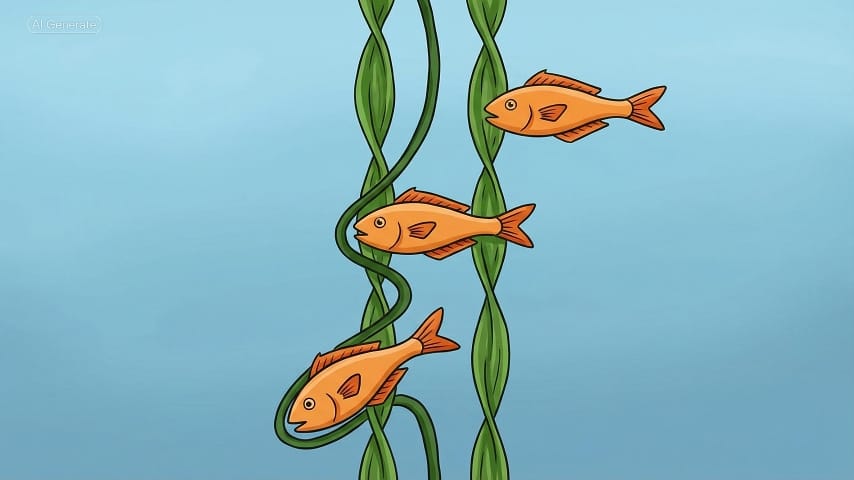
1. The fish passes through the first large-mesh layer
The outer layer has wide openings (70–100 mm), so the fish swims through easily.
2. The fish hits the fine inner mesh
The middle layer has small mesh (25–35 mm) and is deliberately longer and looser than the outer layers — sometimes up to 20% longer.
It folds around the fish as soon as it touches it.
3. The fish and the inner mesh push into the second outer layer
Once the inner net wraps around the fish, both get pushed into the opposite large-mesh layer.
This creates a pocket where the fish becomes trapped.
Inside that pocket the fish has no room to turn or escape — the key advantage of trammel net fishing.
Why Trammel Nets Are So Effective
- Catch fish of different sizes
- Catch slow-moving species
- Use natural movement of fish
- Do not require towing or active pulling
- Work well even on uneven or rocky bottom
- Remain productive in different seabed habitats
Because of this, trammel nets are among the most productive bottom set nets in the Mediterranean.
If you’re interested in sea bream behaviour and bite times, check out our guide:
👉 Best time to fish for sea bream
Where Trammel Nets Are Commonly Used
Trammel nets are ideal for:
- rocky bottoms
- algae-covered slopes
- edges of Posidonia meadows
- transitions from shallow to deeper water
- bays, channels and capes
- mixed and irregular seabeds
They work best between 2 and 30 m, although professionals sometimes place them deeper.
Legal Regulations (Short Overview)
Across the Mediterranean, trammel nets are:
- allowed only with a commercial fishing license
- limited in length, height and mesh size
- seasonally regulated (e.g., summer bans during spawning)
- monitored to prevent overfishing
Montenegro and Croatia have strict rules defining:
- minimum inner mesh size
- maximum net height
- minimum distance from the coast
- open and closed seasons
These rules change periodically, but the principle is the same: trammel net fishing is meant for professionals, not recreational anglers.
Also read our guide about the weever fish and how to avoid stings:
👉 Weever fish – how to protect yourself
Advantages and Disadvantages of Trammel Nets
Advantages
- Extremely high catch efficiency
- Good selectivity for bottom-living species
- Work on all types of seabed
- Require less strength compared to trawls
- Smaller impact on the bottom compared to dredges and trawlers
- Easy to use — one skilled fisher can handle the entire process
Disadvantages
- May catch unwanted species if mesh size is too small
- Require good knowledge of terrain
- Sensitive to strong currents
- Strictly regulated by law
Best Seasons for Using Trammel Nets
The most productive periods are:
- late autumn
- winter
- early spring
The sea is also clearer, making the net less visible. When a trammel net becomes covered with debris, it forms a kind of underwater “wall” that fish tend to avoid, which significantly reduces its effectiveness.
For more information on the Adriatic food chain and predators that hunt bogue, check our detailed article:
👉 Which species eat bogue in the Adriatic
Video Example
You can watch a short December trammel net haul in the video below.
Soon we plan to film the entire process — from preparing and setting the net, all the way to hauling both trammel nets and single-walled gillnet.
Subscribe to our YouTube channel so you don’t miss upcoming content!
If you want to learn more about how trammel nets are classified internationally, FAO provides a clear and reliable overview of this fishing gear.
👉 FAO – Fisheries and Aquaculture
Join the Kotor Fisherman Community 🎣
If you love fishing and want to be the first to get new articles about techniques, fish species, and the best locations in the Adriatic, subscribe to our free newsletter.
👉 It’s free, and every week you’ll receive valuable tips and stories directly in your inbox.
🎣 Send us your fishing stories, photos, and videos!
👉 The most interesting contributions will be featured on our blog or social media with your name or nickname.
📩 Share them through one of our contact profiles below or directly via email: newsletter@kotorfisherman.com