Although often considered “simple fishing”, bogue fishing is actually a very active and dynamic type of angling. It requires constant float monitoring, small rig adjustments, steady groundbaiting rhythm and good reflexes — whether you’re fishing with a rod or handline.
That’s exactly why bogue fish are not targeted only by beginners. Many experienced anglers regularly return to bogue fishing purely out of love for the sea, but also as excellent practice for more demanding fishing techniques.
The Mediterranean bogue fish (Boops boops) is one of the most widespread fish species in the Adriatic Sea, yet also one of the most underestimated among anglers. Often dismissed as just “small fish”, bogue actually plays a crucial role in the marine ecosystem and in both recreational and sport fishing.
In this guide, you’ll learn where Mediterranean bogue fish live, how to catch them throughout the year, why they stay active even in winter, and why bogue fish are a key link in the marine food chain.
🐟 Bogue Fish – Basic Characteristics
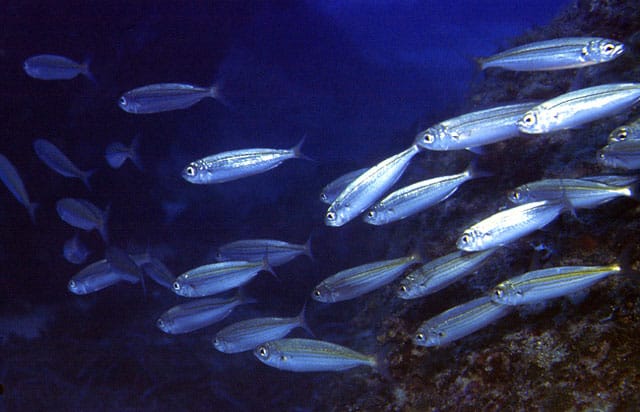
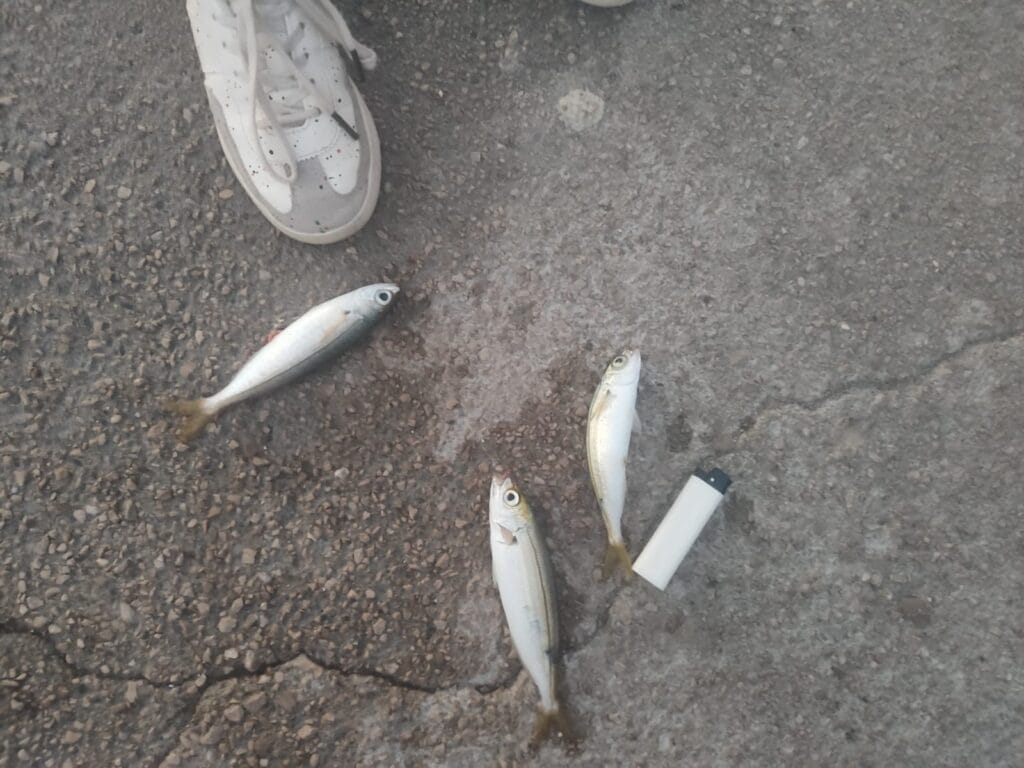
Bogue fish (Boops boops) belong to the Sparidae family and are easily recognized by:
- elongated, silvery body
- large, prominent eyes
- darker lateral line along the body
They usually grow up to 20–25 cm, although larger specimens can be found in deeper waters. Mediterranean bogue fish move in schools and can be encountered year-round in coastal areas.
🌊 Where Mediterranean Bogue Fish Live
Bogue fish typically inhabit:
- shallow coastal waters
- breakwaters, piers and harbors
- rocky and mixed seabeds
- slopes transitioning from shallow to deeper water
They are most commonly found at depths between 5 and 40 meters. During winter, bogue fish often move slightly deeper, especially when sea temperatures drop.
❄️ Bogue Fish in Winter
One of the reasons bogue fish are so interesting is their winter activity. While many species become inactive or retreat offshore, bogue fish continue feeding.
In winter, bogue fish:
- form tighter schools
- stay between 15–30 m depth
- are most active in early morning hours
- respond well to light groundbaiting
This makes Mediterranean bogue fish a reliable catch even when the sea seems “dead”.
🎣 How to Catch Mediterranean Bogue Fish (Shore & Boat)
Bogue fishing is simple, but reflex-based.
Common tackle:
Light telescopic rods without guides are most commonly used, especially for shore fishing from piers, rocks or harbor walls.
A typical rig includes:
- light telescopic rod
- small float
- rig with two small hooks
- minimal lead (just enough to stabilize the float)
- thin line, 20–30 cm longer than the rod
👉 White Fish of the Adriatic Sea – Most Common Species and How to Catch Them
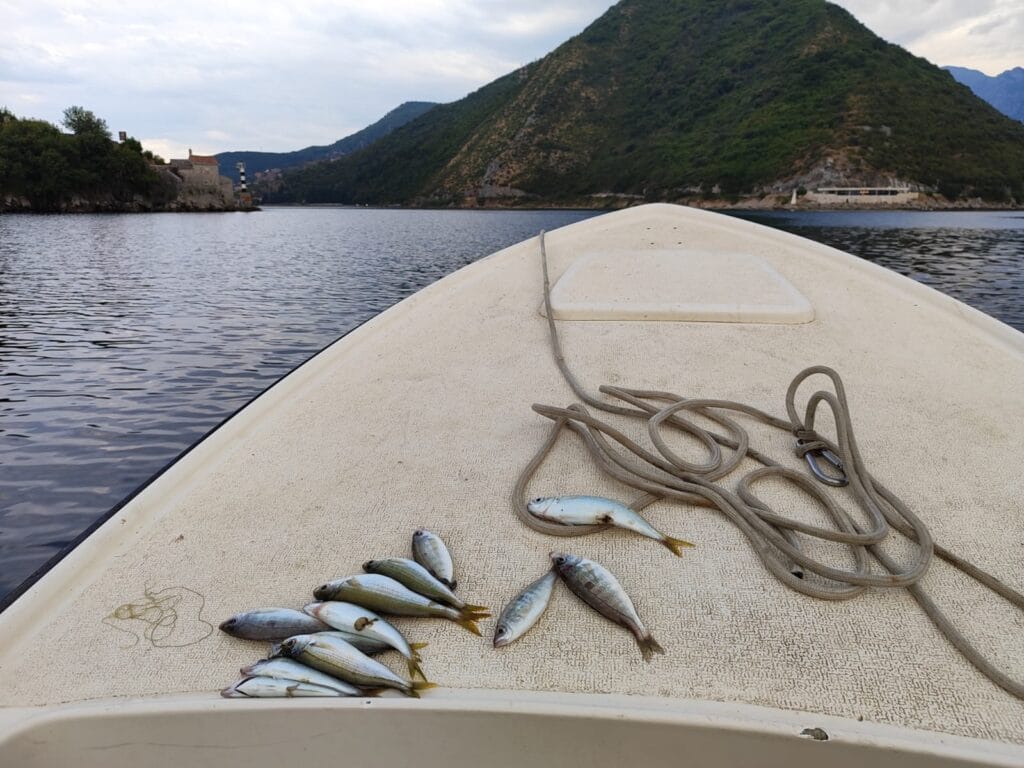
We intentionally skip detailed boat fishing techniques here, as bogue fish are most efficiently caught from shore. When fishing from a boat on the bottom, target species are usually red porgy, common pandora or gilthead seabream — bogue may appear as bycatch but is rarely the main target.
🪱 Best Baits for Bogue Fish
Although bogue fish accept many baits, bread is often more than enough, especially in shallow coastal fishing. Fresh bread is ideal because it shapes easily and stays better on the hook.
An even better option is “pastella” — a simple mix of bread or flour with a bit of cheese and water. This elastic bait stays longer on the hook and attracts bogue fish faster.
During fishing, it’s recommended to crumble old bread and throw small amounts regularly. With steady groundbaiting, Mediterranean bogue fish become more aggressive and less cautious, staying longer in the fishing zone.
🐠 The Role of Bogue Fish in the Ecosystem
Despite their size, bogue fish play a major role in the marine food chain. They feed on plankton, algae and small organisms, and in turn serve as primary prey for many predators.
That’s why Mediterranean bogue fish are:
- essential for ecosystem balance
- indicators of healthy coastal waters
- natural predator magnets
If you’re interested in which predators feed on bogue fish and how they’re used as live bait, we’ve covered that in a separate article. During bogue fishing, you can always cast a larger live bogue as bait — you never know which predator might be nearby.
👉 Bogue Fish as Live Bait – Predators That Hunt It and How to Use It
🍽️ Is Mediterranean Bogue Fish Good to Eat?
Bogue fish have:
- white, soft flesh
- mild flavor
- low fat content
They are commonly:
- fried
- breaded
- used in fish stews
While not considered a “premium” culinary fish, fresh Mediterranean bogue fish make a healthy and perfectly decent meal, especially when eaten the same day they’re caught.
⚠️ Common Mistakes When Fishing Bogue Fish
- using line that’s too thick
- oversized hooks
- no groundbait
Bogue fish prefer calm conditions, light tackle and natural bait presentation.
👉 Trammel Net (Popunica) – How This Three-Layer Fishing Net Works
🔚 Conclusion
Mediterranean bogue fish are much more than “small fish from the shallows”. They are permanent residents of the Adriatic, reliable winter catches, a vital link in the marine food chain and an essential part of everyday coastal fishing.
If you understand where Mediterranean bogue fish live, how they behave and how to catch them, you’ll succeed even when others say “the fish aren’t biting”.
Join the Kotor Fisherman Community 🎣
If you love fishing and want to be the first to get new articles about techniques, fish species, and the best locations in the Adriatic, subscribe to our free newsletter.
👉 It’s free, and every week you’ll receive valuable tips and stories directly in your inbox.
🎣 Send us your fishing stories, photos, and videos!
👉 The most interesting contributions will be featured on our blog or social media with your name or nickname.
📩 Share them through one of our contact profiles below or directly via email: newsletter@kotorfisherman.com