Why Choose Natural Fishing Baits?
Natural fishing baits have an authentic scent, texture, and color that fish instantly recognize as real food. While artificial lures imitate prey, natural fishing baits are the original item on the menu. That’s why most anglers still rely on sardines, worms, or shrimp – even though artificial options are more abundant than ever.
According to experienced anglers and forums, squid, sardines, sea worms, and shrimps remain the most effective natural fishing baits in the Mediterranean. Each bait, however, has its own time, target species, and presentation method.
Sardines, Anchovies, and Small Fish Fillets
Sardines and anchovies are universal fishing baits in the Adriatic and Mediterranean. Their strong scent spreads through the water and attracts fish from a distance. A sardine can be used whole, cut into pieces, filleted, or salted.
The best technique is to filet the sardine, mount it on a hook, and secure it with an elastic thread. Sardines are ideal for almost every predator species in the region.
Fillets of other small blue fish are used in a similar way. Thanks to firmer meat, they last longer on the hook and are excellent for bottom fishing or longlines. When targeting dentex or amberjack, anglers often combine a fish filet wrapped in a thin strip of squid – creating a perfect “sandwich bait.”
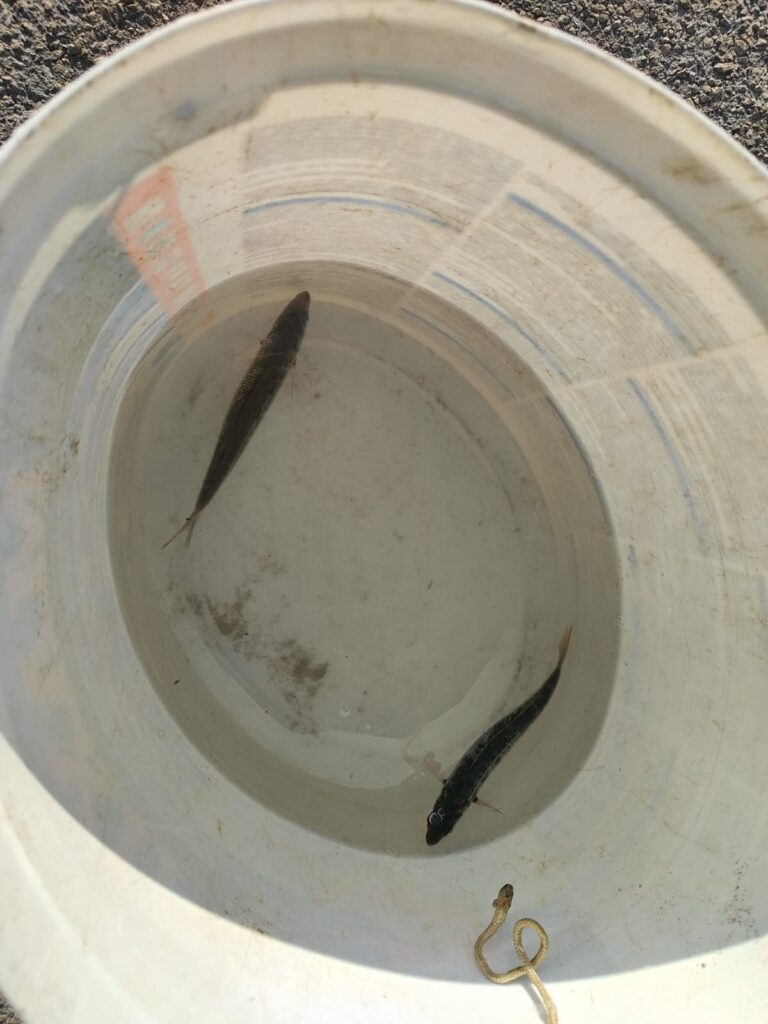
👉 Read more about one of the most productive natural baits — the bogue (boops boops) and what to expect when using it as bait here.
Sea Worms – Kings of Night Fishing
The large sea worm, along with bibi and Korean worm, are considered the most efficient fishing baits. Research on bioluminescent baits explains that the sea worm glows slightly after death and releases iodine-rich fluids that attract fish.
It’s recommended to cut the worm lengthwise and wrap it with an elastic thread to keep it firm on the hook.
Bibi worms glow less, so they are usually turned “inside-out” before mounting. The Korean worm is lively and releases a strong scent.
Which fish go for worms? Sea worms are unbeatable when fishing for gilt-head bream, white seabream and many others. Their scent and glow make them perfect for night shore fishing.
Always use a worm needle to mount them and keep them alive in a container with seawater in a cool, dark place.
Shrimp and Small Crustaceans
Shrimp is one of the most popular natural fishing baits for Mediterranean fishing. Hardly any fish can resist it. Shrimp have soft shells and rich meat, making them easy to cut and mount.
When targeting seabass, live shrimp mounted through the tail works best – it moves naturally and attracts predators.
Shrimp can be collected near rocky or sandy bottoms using a small net, then kept alive in seawater or preserved in salt brine.
Squid – The All-Time Favorite Fishing Bait
Squid is a legendary fishing bait, second only to sea worms in effectiveness. Its tentacles and skin release a powerful scent and stay firm on the hook.
For night fishing, remove the squid’s skin, briefly heat it over a flame, and present it with the shiny side facing outward.
Squid baits are irresistible to bream, seabass, dentex, grouper, and other predators.
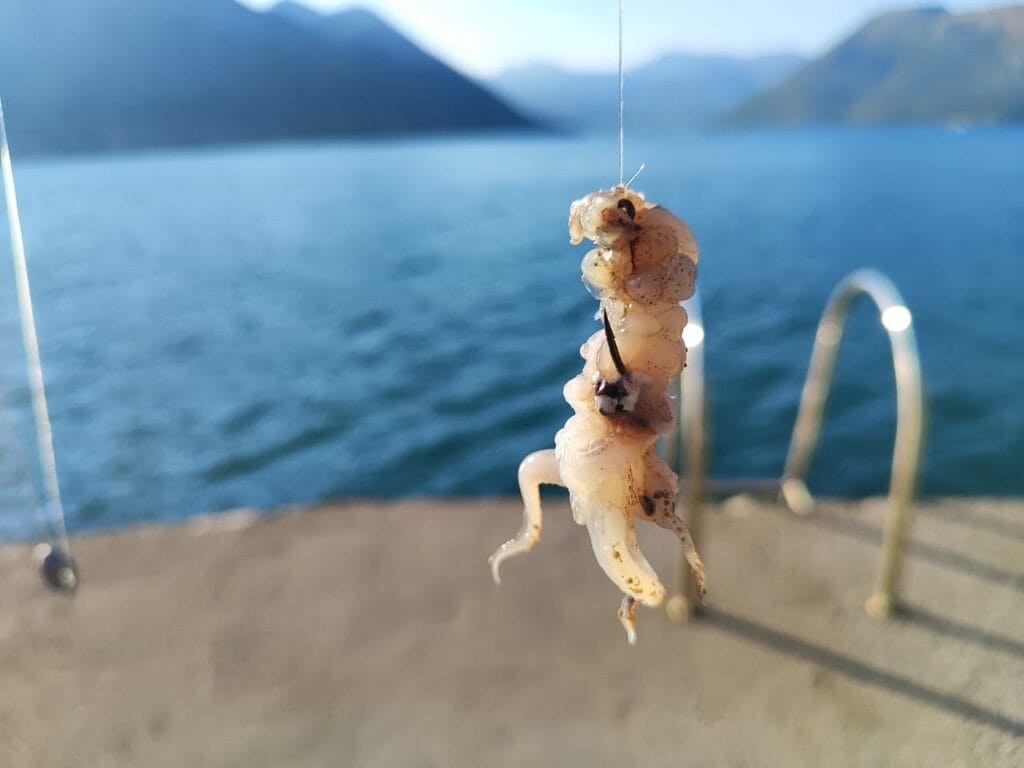
Octopus and cuttlefish are also excellent. Their firm tentacles make them perfect for deep-sea fishing. Many anglers dip pieces of octopus in olive oil to enhance the scent. For dentex and gilt-head bream, a popular trick is to combine a strip of cuttlefish with a small fish filet – a visual and aromatic combo that few fish can resist.
Shellfish and Sea Snails
Mussels and clams are soft, aromatic baits ideal for bream, bogue, and seabass. Because they fall off easily, anglers dry and salt them to make them firmer.
Mussels can also be crushed and thrown into the water as chum (groundbait) to attract fish to the spot.
Soft shell baits are often combined with tougher pieces of squid to make them last longer — a technique that works perfectly for sparids like sea bream, seabass, and bogue.
Crabs and Hard-Shelled Baits
Various small crabs and crustaceans are excellent natural fishing baits for scorpionfish, seabream, and dentex.
Soft-shelled crabs are preferred for shore fishing, while hard-shelled ones last longer for deep-sea setups.
When mounting, use elastic thread to keep the crab’s claws free so they move naturally in the current.
If your goal is a specific species, we’ve also written detailed guides on fishing for bonito and fishing for dentex.
Plant-Based and Unusual Baits
Although most sea fishing uses animal-based baits, plant-based baits such as bread, dough, or cheese mixtures can attract mullets, bogue, and small coastal fish.
These are best for harbors or calm bays. Some anglers even use cheese or chicken strips when traditional baits are unavailable.
Aged cheese releases strong aromas that can attract bream, while thin chicken strips can work surprisingly well for seabream and saddled bream.
How to Prepare and Store Natural Fishing Baits
- Salting and drying: Sardines, squid, and mussels can be salted to make them last longer and stay on the hook.
- Elastic thread: Wrap delicate baits (worms, shrimp, fillets) to prevent them from falling off and to allow longer casts.
- Live storage: Keep shrimp and worms alive in a seawater container with an air pump for best results.
- Brine preservation: Dead shrimp or worms can be stored in 10–15% salt brine for a few days. Salted sardines can last for months.
When to Use Which Bait?
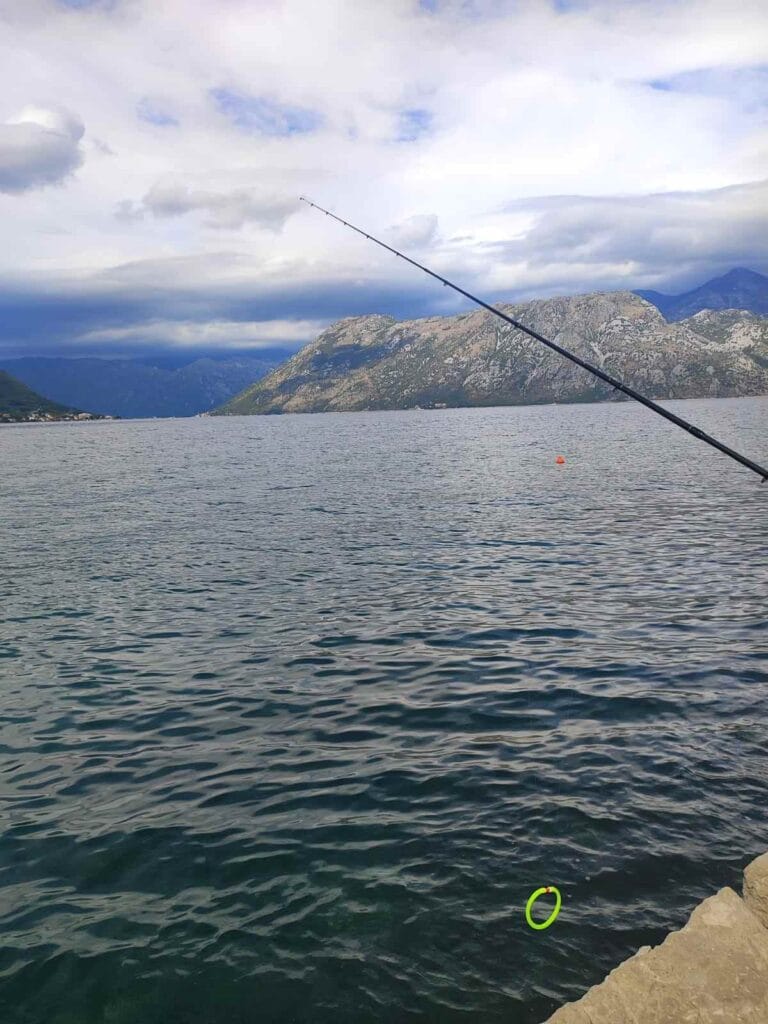
- Calm sea & night fishing: Use baits with strong scents – worms, bibi, and mussels.
- Deep-sea or trolling (pendula): Go for squid strips or fish fillets; predators like dentex and amberjack love them.
- Shore & small fish: Shrimp, clams, and worms are perfect for sparids and mullets.
Final Thoughts on Natural Fishing Baits
Natural fishing baits remain the most effective way to attract fish in the Adriatic and the entire Mediterranean.
Whether you choose sardines, worms, shrimp, squid, shellfish, or crabs, they offer unbeatable scent and texture. With proper preparation – salting, brining, or wrapping with elastic thread – you’ll increase your catch and enjoy that unforgettable sound of the reel when a fish bites.
👉 If you prefer active fishing with artificial lures, check out our guide: Lures for Fishing in the Adriatic – Full Guide
📬 Join our newsletter to get weekly fishing tips, techniques, and stories from the Adriatic delivered straight to your inbox – for free!
Send your fishing photos and stories to newsletter@kotorfisherman.com – the best ones will be featured on our blog and social channels.