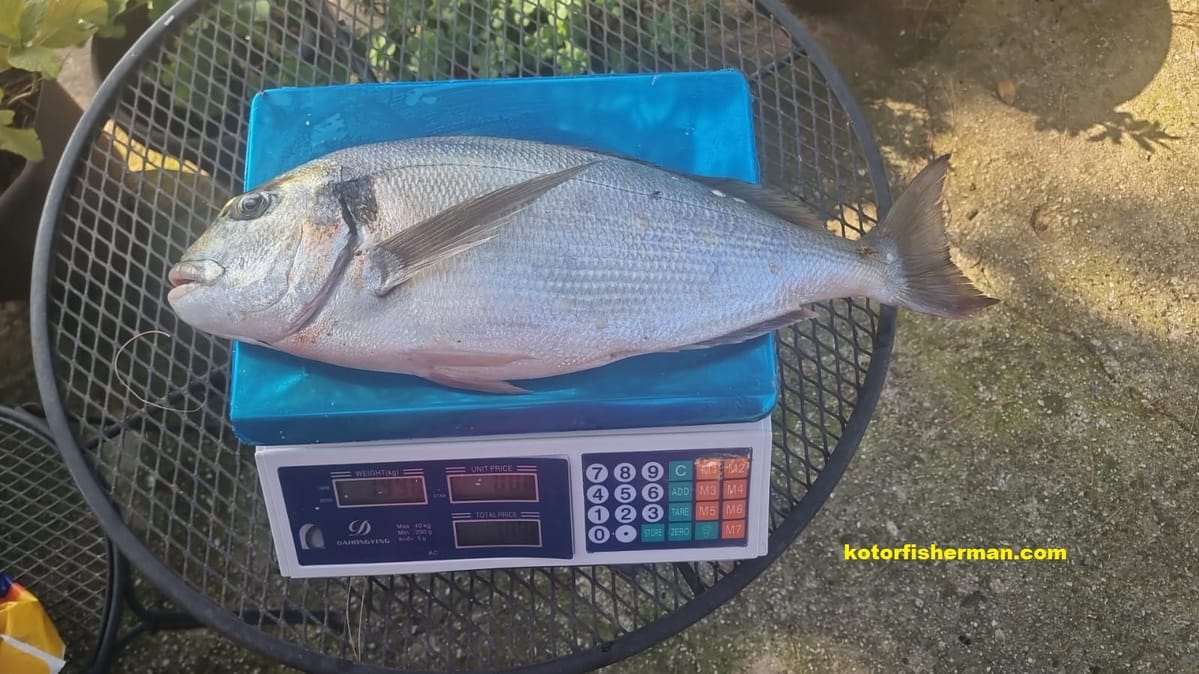
The gilthead seabream (Sparus aurata) — known as orata in Italy and tsipoura in Greece — is one of the most iconic and sought-after fish in the entire Mediterranean.
But despite its wide distribution, it’s a cautious and unpredictable species. Every experienced angler knows that success depends heavily on one factor:
➡️ fishing at the right moment.
In this guide, we combine the knowledge of Italian, Greek, and Adriatic anglers to explain the best time to fish for sea bream throughout the entire year.
🕒 Best Time to Fish for Sea Bream During the Day
Sea bream follows very specific activity windows. Across the Mediterranean, most anglers agree on three key moments:
1. Early morning – the most consistent time
Italian surfcasters say the seabream feeds “al primo chiarore” — at first light and the first 60–90 minutes after sunrise.
Why?
Because crabs, shellfish, and worms leave their hiding spots, attracting seabream into the shallows.
2. Late afternoon & sunset
Greek anglers call this the “golden hour”.
Low light makes sea bream less cautious, and reduced visibility in the water works in the angler’s favor.
3. Night fishing – different rhythm, different spots
Mediterranean night patterns are unique:
- Italians say nighttime usually brings smaller seabream (up to 1 kg).
- Greeks note that summer nights (July–September) can be excellent, thanks to the abundance of small prey in the shallows.
Conclusion:
➡️ If you want bigger seabream — fish at dawn and sunset.
➡️ If you want more bites — summer nights can be productive.
👉 Related: Why fish bite at certain times of day – the science behind “feeding time”
🍂 Best Time to Fish for Sea Bream by Season
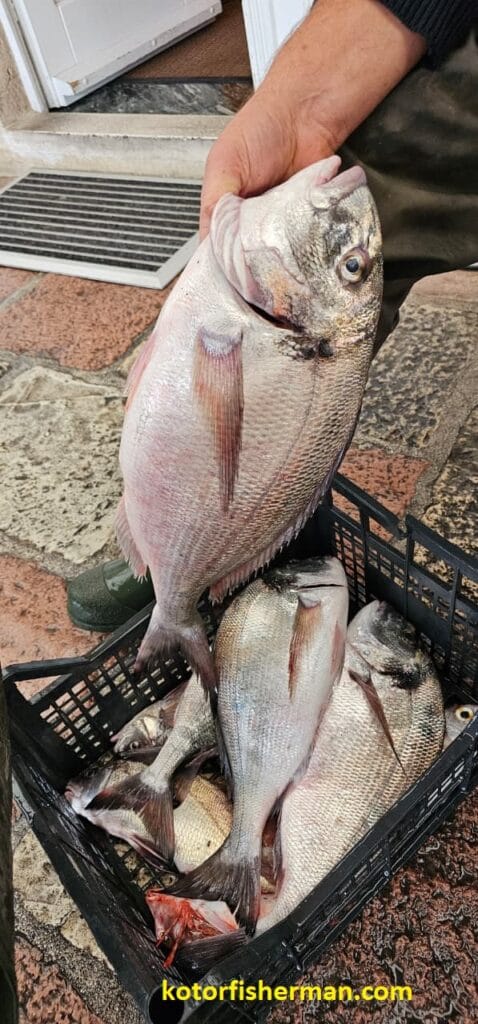
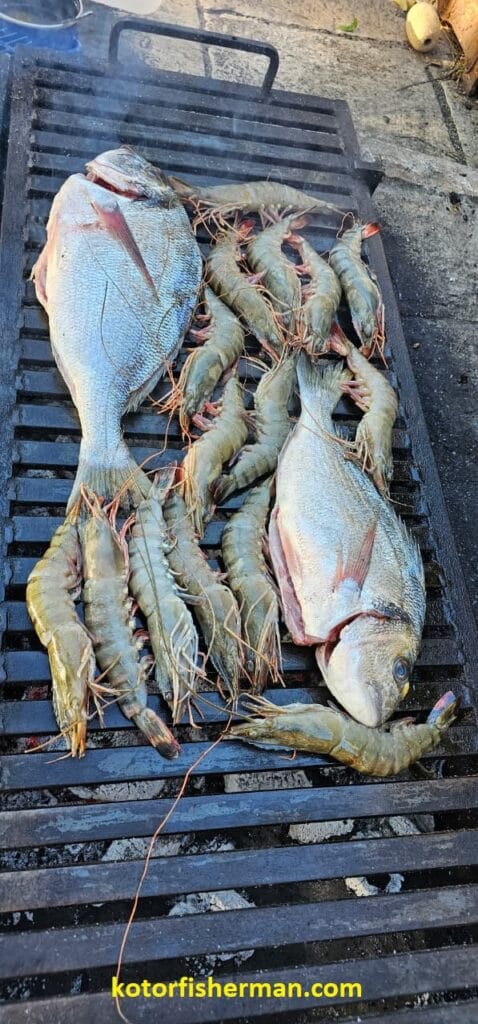
Seabream behavior changes sharply between seasons — depth, feeding patterns, and activity levels all shift.
⭐ Autumn (September–December) – peak sea bream season
Both Italian and Greek anglers agree that this is the best time of the year:
- the sea is still warm
- seabream feeds aggressively before winter
- fish move closer to the coast
- pre-spawning feeding occurs in October–November
After strong winds and once the sea calms down but stays slightly murky, trophy seabream enter shallow feeding zones.
🌸 Spring (March–May) – return to the shallows
Greek fishing sources describe spring as a “recovery period”:
- the sea warms up
- food returns to sandy and mixed bottoms
- seabream patrols 5–15 m again
Best results happen on warm, stable days without strong wind.
☀️ Summer (June–August) – caution required
In summer, seabream:
- stays deeper during bright, hot days
- moves shallow at night
Best summer tactics:
- fishing after 9 PM
- fishing before dawn
- choosing slightly murky water with gentle surface movement
❄️ Winter (December–February) – rare but impressive catches
Italian anglers consider winter difficult except during special conditions:
- total calm + sunny weather
- calm sea right after a storm (mare dopo mareggiata)
Greeks call this the “Alkyonides period” — short winter warm spells when big seabream enters shallow water.
👉 Related: Winter shore fishing – techniques, baits & target species
🌊 Sea Conditions: When Seabream Bites Best
1. The day after rough seas
Italian surfcasting forums repeat the same rule:
➡️ The best time to fish for sea bream is the day after big waves.
The seabed is disturbed, food is exposed, and seabream becomes bolder.
2. Slightly murky water + light onshore wind
Perfect combination for seabream confidence.
3. Avoid crystal-clear, windless days
In ideal visibility, seabream spots everything — line, hook, movement.
🐚 Where to Fish for Sea Bream in the Mediterranean
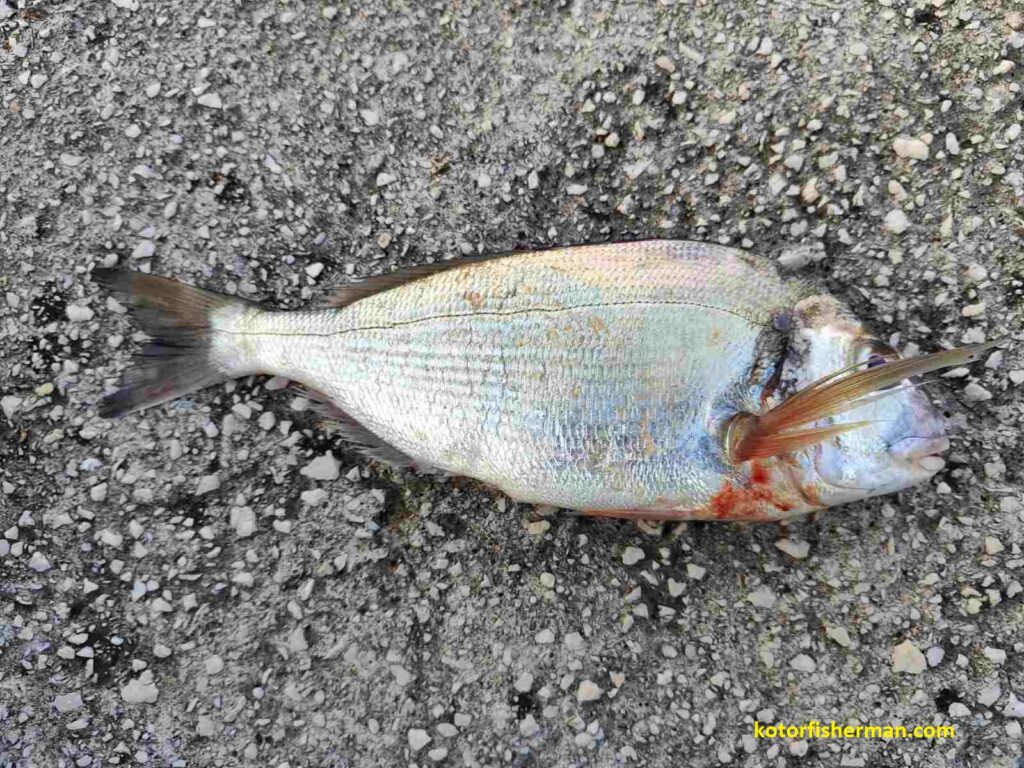
Regardless of country, seabream prefers the same terrain:
A) Mixed bottoms (sand + posidonia + rock)
Prime seabream habitat.
B) Shellfish-rich zones
Italians call them “zone ricche di cozze” — natural mussel patches, breakwaters, harbour structures.
C) Shallow flats (3–10 m)
Excellent in spring and autumn.
D) Natural depth transitions (break lines)
Where sand meets seagrass.
🪱 Best Baits and Rigs for Sea Bream
Mediterranean consensus is strong here:
Top baits:
- mussel
- shrimp
- bibi worm
- hermit crab
- lugworms (Korean/American)
- squid strips (excellent in winter)
Top rigs:
- sliding sinker 20–60 g
- long fluorocarbon leader (0.20–0.28 mm)
- chinu / wide gape hook sizes 1–1/0
Sicilian anglers often use very long leaders (1.2–1.5 m) for clear water.
🌙 Moon Phases and Tides
Mediterranean fishermen follow one universal rule:
➡️ The best time to fish for sea bream is 2–3 days around the new moon or full moon.
Stronger currents → more active feeding.
Tide movement also increases bites, especially in autumn.
👉 Related: Dentex fishing – season, depth and proven techniques
🧭 Final Verdict: The Best Time to Fish for Sea Bream
If you had to choose just ONE moment in the whole year:
✔️ Early autumn
✔️ The day after rough seas
✔️ Around sunrise or just before sunset
✔️ With slightly murky water
This combination consistently produces the biggest Mediterranean seabream.
Join the Kotor Fisherman Community 🎣
If you love fishing and want to be the first to get new articles about techniques, fish species, and the best locations in the Adriatic, subscribe to our free newsletter.
👉 It’s free, and every week you’ll receive valuable tips and stories directly in your inbox.
🎣 Send us your fishing stories, photos, and videos!
👉 The most interesting contributions will be featured on our blog or social media with your name or nickname.
📩 Share them through one of our contact profiles below or directly via email: newsletter@kotorfisherman.com