What Is a Bonito Gill Net?
A bonito gill net is one of the oldest and most effective fishing nets used for catching bluefish in the Adriatic Sea. Unlike trammel nets, which consist of three layers and primarily target white fish, the bonito gill net has a larger mesh size and a different construction.
Its main purpose is catching bonito, bullet tuna and occasionally smaller specimens of greater amberjack. The bonito gill net is not towed; instead, it is set as a simple stationary gill net.
Historical maritime records describe this type of net as a firmly woven stationary gill net, placed and anchored at specific locations traditionally used for catching bonito and tuna.
What Does a Bonito Gill Net Look Like and How Does It Differ from Other Nets?
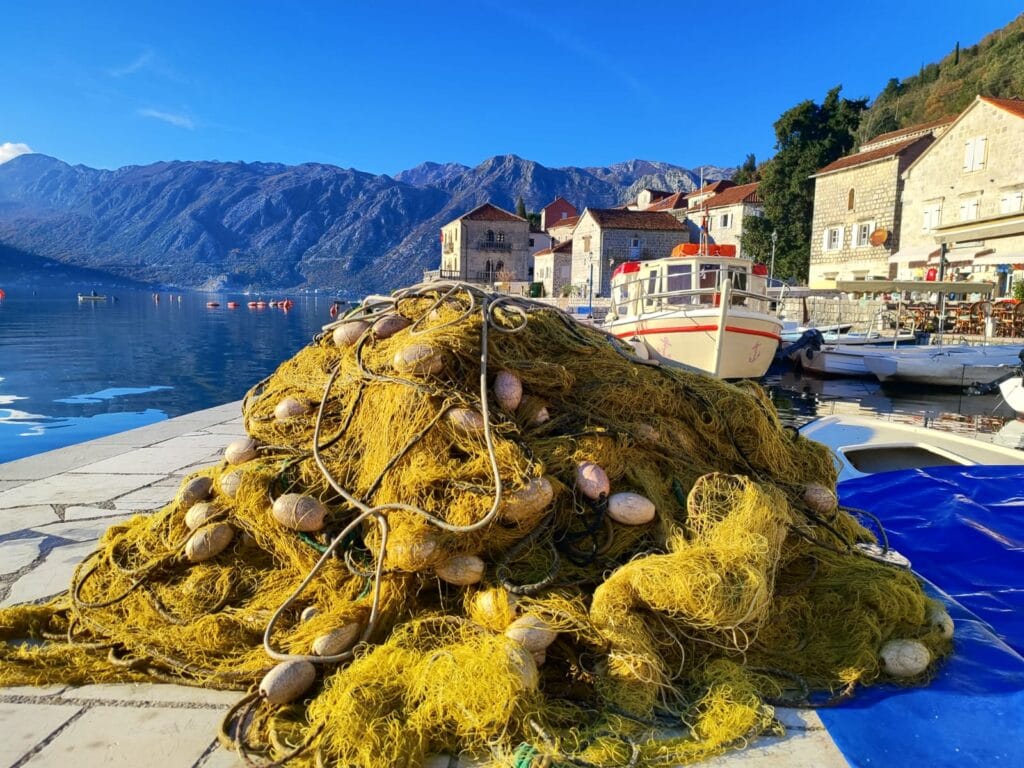
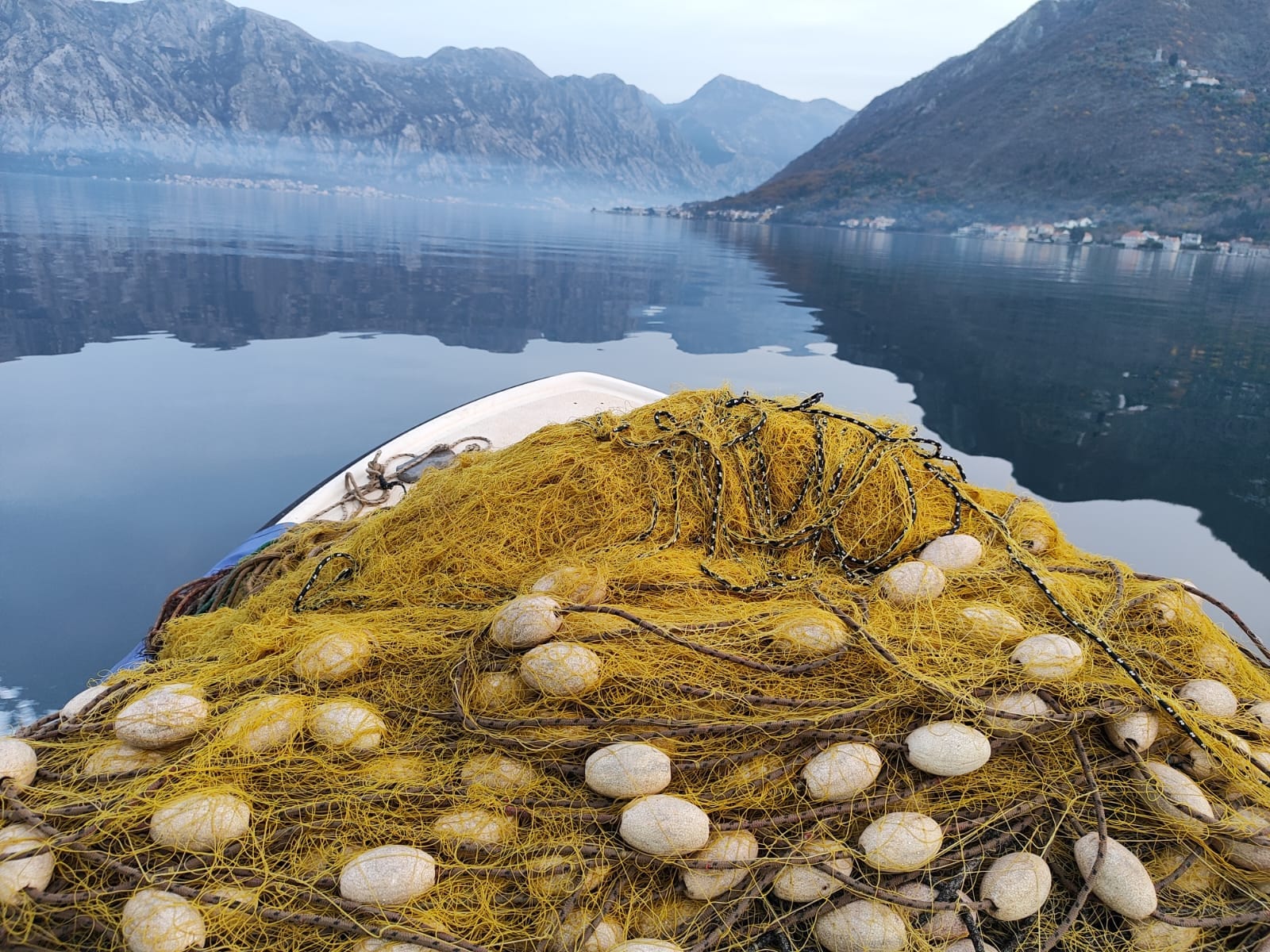
A bonito gill net consists of three main elements: floating buoys, netting, and lead weights along the bottom edge. It is a single-panel stationary gill net, set with one end tied to the shore or a buoy, while the other end is anchored with a stone or heavy weight.
The upper edge of the net carries a line of floats (historically wooden barrels, today modern floats) that keep the net upright. The lower edge, weighted with sinkers or a lead core rope, allows the net to stand vertically in the water column and catch fish that swim into it.
According to fishing regulations, the bonito gill net is classified as a simple stationary gill net intended for catching bonito and other large pelagic fish. The mesh size ranges between 40 and 60 millimetres, making it selective for medium and larger fish.
For anglers who prefer active fishing, proper gear selection is just as important as location, so we recommend reading our guide on shore fishing rods.
Setting and Lifting the Bonito Gill Net
Practice shows that a bonito gill net is most often set at dusk and lifted at dawn to preserve the freshness of the catch. Fish caught shortly after setting can be recognised by their appearance and smell and are usually still suitable for consumption.
If the net remains in the water for several days, part of the catch may become unusable. For this reason, careful timing is essential when using a bonito gill net.
The net is most commonly set down to the seabed, but experienced fishermen know that pelagic fish sometimes swim higher in the water column. In such cases, the net can be set just below the surface using floating containers or buoys. This method requires suitable shore conditions, a distance that allows the permitted net length, no passage of deep-draft vessels, and periods without strong currents to avoid net damage.
Maintenance and Practical Advice
- Mud removal – After strong currents, the net is often covered with mud and sediment. Washing it thoroughly before resetting requires patience but improves future catches and preserves net quality.
- Strong currents – When currents are too strong, the net may collapse, reducing its effective height and allowing fish to swim over it.
- Southern winds – Strong southerly winds often bring bluefish into Boka Kotorska. Catches are usually significantly better once the weather calms. Let us know if this applies in your area as well.
- Silent approach – A bonito gill net is a passive fishing tool; regulations prohibit the use of any devices to scare or drive fish into the net.
Most Common Catches: Bonito, Bullet Tuna, and Amberjack
Bonito (Sarda sarda)
Bonito is a fast predatory fish with a streamlined body and bluish-silver colour marked by dark diagonal stripes on its back. It can grow up to 70 cm in length and weigh up to 9 kg. Bonito travels in large schools and feeds on sardines, anchovies, and small mackerel during spring and summer.
It reaches sexual maturity at 2–3 years of age and spawns during warmer months (May–June). Due to its firm and highly valued meat, bonito is a popular target species. The bonito gill net, thanks to its mesh size, primarily catches medium and larger individuals.
For those who want to learn more about the behaviour and seasonality of this species, we recommend our guide on bonito fishing in the Adriatic, covering techniques, locations, and autumn bait choices.
Bullet Tuna (Auxis rochei)
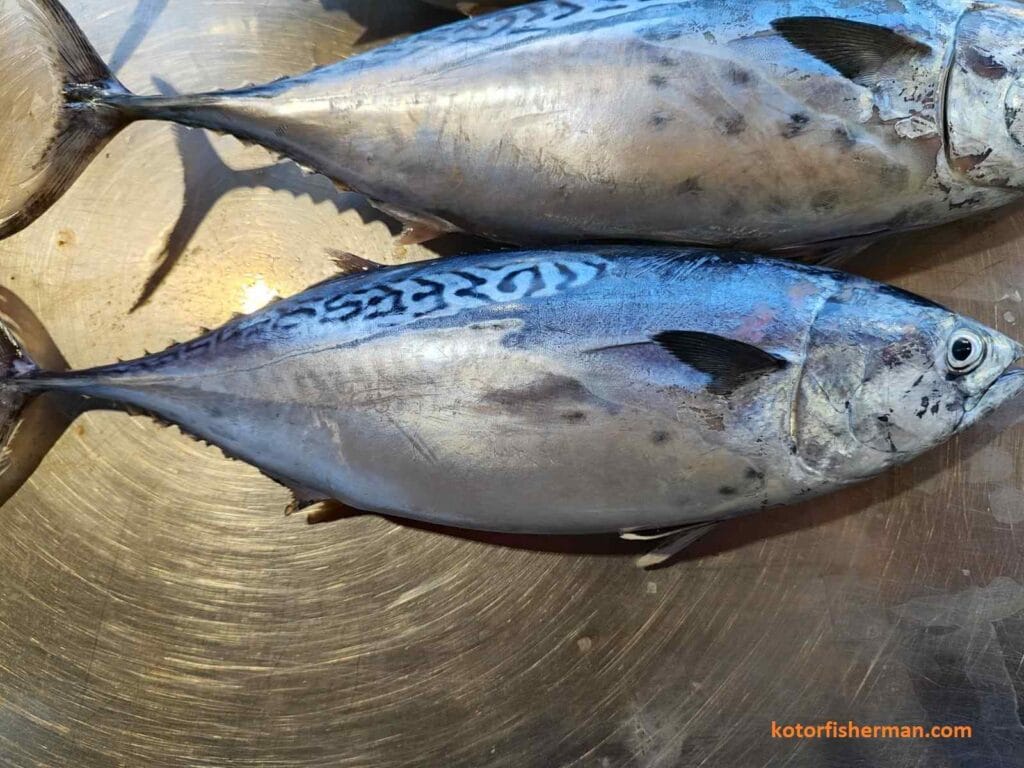
Bullet tuna is a smaller relative of bonito, typically growing to 40–50 cm. It lives in schools in coastal waters and is most abundant during warmer months, with peak catches and spawning occurring between June and September.
Its meat is firm with a mild flavour and is considered a delicacy in Mediterranean cuisine. Bullet tuna often appears together with bonito in the same bonito gill net catch.
Greater Amberjack (Seriola dumerili)
Greater amberjack is an impressive fish that can reach up to 190 cm in length and around 80 kg in weight. Its body is grey-brown with a lighter lateral stripe. Amberjack inhabits depths of 20–70 metres, where it preys on fish, squid, and crustaceans.
In the Adriatic, it is most common during summer and early autumn. Smaller individuals may occasionally enter a bonito gill net, but larger amberjack are too powerful for this type of gear and are usually caught using other fishing methods.
Tradition and Importance of the Bonito Gill Net in Boka and the Mediterranean
Historical and linguistic sources confirm that large-mesh gill nets specifically designed for bonito fishing have been used across the Adriatic and Mediterranean for centuries. Venetian maritime records describe such nets as effective tools for catching bonito, tuna, and occasionally amberjack.
As early as the 17th century, these stationary gill nets were firmly woven and set at permanent fishing locations, anchored to the shore and supported by floating wooden barrels. During the 19th and early 20th centuries, they produced impressive catches and played an important role in sustaining fishing communities in Boka Kotorska and Dalmatia.
Legal Framework and Responsible Fishing
Modern marine fishing regulations generally allow the use of a bonito gill net only with a commercial fishing licence. The mesh size must be between 40 and 60 mm, and the net height must not exceed 400 meshes. These limits help prevent juvenile fish from being caught and protect fish stocks.
In addition to legal requirements, fishermen should follow good practices: respect closed seasons, release undersized fish, and avoid fishing during peak spawning and migration periods.
Tips for Successful Use of a Bonito Gill Net
- Monitor weather conditions – Best results are achieved after southerly winds calm and strong currents weaken.
- Choose appropriate depths – Adjust net height according to fish behaviour; if bonito are feeding near the surface, consider surface-set configurations where feasible.
- Set at dusk, lift at dawn – Leaving the net overnight allows fish to entangle naturally.
- Maintain the net – Regular removal of mud, algae, and shells extends net lifespan and ensures smooth redeployment.
- Combine tradition and modern tools – Sonar and GPS can help identify productive locations, but experience and local knowledge remain essential.
Personal Experience with Bonito Gill Nets in Boka Kotorska
For decades, the bonito gill net was an integral part of fishing life in Boka Kotorska and throughout the eastern Adriatic. Today, however, conditions at sea are very different. Fish stocks are declining year after year, and the economic viability of commercial fishing is increasingly uncertain.
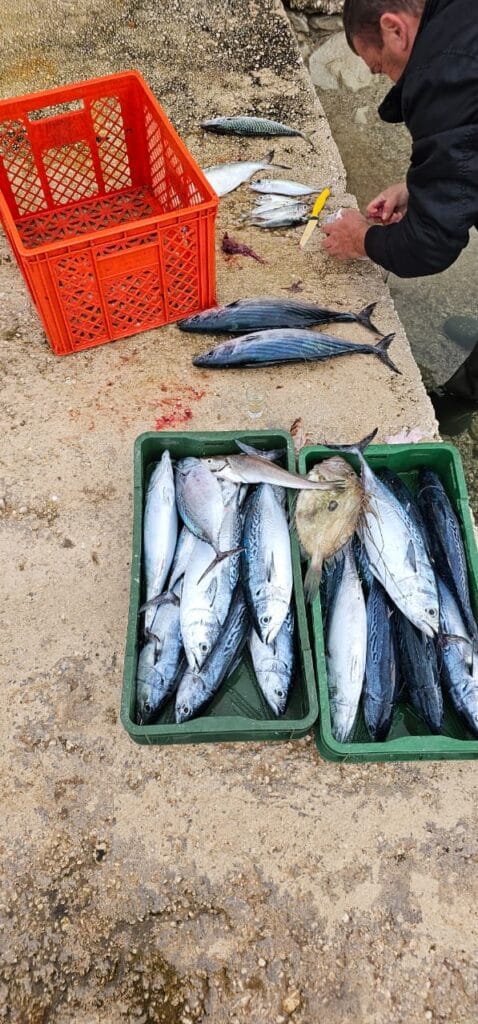
Due to daily obligations and work, we have not been able to set bonito gill nets as often as we would like. Still, a few outings at the end of 2025 were enough to show the situation clearly—bonito were almost absent, while bullet tuna catches were modest and far below historical expectations.
Whether this is due to changes in migration, fishing pressure, climate factors, or a combination of all three is difficult to say. What is certain is that the sea now demands more patience, more knowledge, and far greater respect than in the past.
If you’re interested in whether early 2026 will bring changes—whether bonito will return to Boka and what the bluefish season will look like—subscribe to our updates. We share real experiences from the sea, without embellishment, exactly as they are.