Fishers often notice that on some days fish bite like crazy, while on others the sea feels completely empty. Although many people blame “luck”, there is real science behind feeding behavior. Fish never bite randomly – they respond to a combination of light, pressure, currents, moon phases, tides, and water temperature. Understanding these factors can dramatically increase your chances of a successful catch. Once you understand why fish bite at certain times, planning your fishing trip becomes far easier. Below you’ll find the most important natural indicators that influence when fish become active and why these “feeding time” periods happen, especially in the Adriatic and Mediterranean.
🟦 1. Sunrise – The First Peak of Activity
Sunrise is one of the most famous and reliable periods for fishing. Many seasoned anglers claim the first 30–60 minutes after sunrise are the most productive.
Why fish bite at sunrise:
- The sudden transition from darkness to weak light activates ambush predators (seabass, white seabream, gilthead bream).
- Small marine organisms wake up after the night: baitfish, crabs, shrimp, and zooplankton start moving.
- Predators use low light to strike prey that can’t see well.
- Fish become bolder and move closer to the shore because the dim light provides natural camouflage.
In the Adriatic, especially during summer and autumn, sunrise is often the single best time for shore fishing. This is also one of the moments when you can clearly understand why fish bite at certain times, as their activity surges with the first light.
🟦 2. Sunset – The Second Major Feeding Time
Sunset brings the second wave of activity. Many species feed heavily before nightfall.
Why this happens:
- The changing light level boosts predator hunting instincts.
- Small fish stop feeding and head toward safer zones, followed by predators.
- Cooler evening temperatures bring fish closer to shore during summer.
- Sunset often lasts longer as an active period compared to sunrise, especially in autumn.
This is also the best time to target seabass with lures in harbors, channels, and sandy beaches.
🟦 3. Air Pressure – A Silent Trigger of Fish Behavior
Atmospheric pressure directly affects the fish’s swim bladder and their sense of balance. When pressure changes, fish feel discomfort and adjust their feeding habits.
High, stable pressure = great fishing
- Fish are active
- Normal feeding behavior
- Predators patrol freely
Rapid pressure drop = fish become cautious
Usually means bad weather is coming:
- Fish move to safer zones
- Feeding slows down
- Activity shifts to deeper water
Pressure rising again = renewed activity
Once the weather stabilizes after a storm, fish become active again.
👉 Practical rule:
The best time to fish is before a weather change (slowly falling pressure) and after pressure stabilizes again.
🟦 4. Moon Phases – The Secret Mechanism Most Anglers Ignore
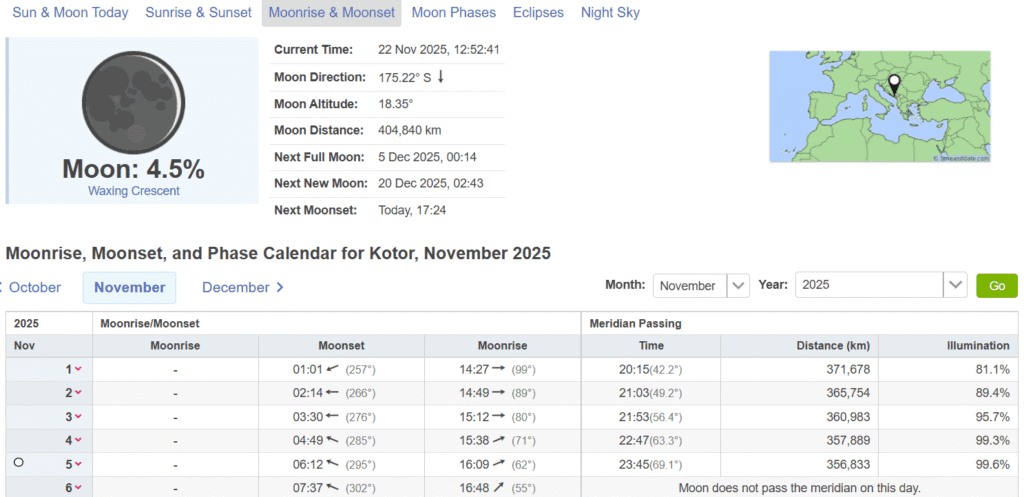
Moon phases have a major influence on marine species. Fish respond noticeably to:
- Full moon
- New moon
- Tides
- Nighttime brightness
Full Moon
- Strong nighttime activity
- Many species feed more at night
- Daytime fishing can be weaker
New Moon (dark nights)
- Fish see poorly at night
- Daytime activity increases
- Predators attack more aggressively
Tides in the Adriatic
Although tides are weaker than in the Atlantic, the rules still apply:
- High tide brings fish closer to shore
- Low tide pushes fish deeper
- The best fishing occurs during the transition — when water starts rising or falling
📌 For more details, see our guide on moon phases and tides.
🟦 5. Water Temperature – The Most Important Factor
Temperature controls fish metabolism, which controls movement and feeding — and therefore why fish bite at certain times.
Cold Water = Slow Metabolism
In winter:
- Fish move deeper
- Eat less
- React slowly to baits
Warm Water = Fast Metabolism
In summer:
- Fish feed more often
- Move closer to shore
- Are most active at dawn and dusk
Optimal temperatures:
- Seabass: 10–20°C
- Gilthead bream: 15–24°C
- Pelagic species: 17–28°C
When the temperature drops suddenly due to weather changes, fish usually stop feeding until conditions stabilize. Water temperature is one of the clearest explanations of why fish bite at certain times, because it controls metabolism and movement.
If you’re interested in long-term climate impacts, read our detailed guide here:
Internal link → https://kotorfisherman.com/en/climate-change-in-the-adriatic-sea/
And for winter fishing techniques:
Internal link → https://kotorfisherman.com/en/winter-shore-fishing-techniques-baits-tips/
🟦 6. The Combination of Factors – The Fishing “Golden Hour”
The best fishing happens when several factors align.
Example of a strong feeding period:
- Slight pressure drop
- Sunset
- New moon
- Light breeze
- Stable water temperature
That’s when anglers say: “Tonight they will definitely bite.”
Example of the worst feeding period:
- Strong wind shift
- Sharp pressure drop
- Murky water
- Full moon
- Very cold water
- Midday, strong sunlight
During these conditions, fish retreat and become nervous and inactive. When these conditions overlap, you immediately see why fish bite at certain times and how feeding intensity can suddenly spike.
🟦 7. How to Use This Science in Practice
✔ Watch the pressure
Ideal: 1012–1020 mb, stable or rising.
✔ Fish at sunrise and sunset
If you have only one hour available — choose these windows.
✔ Track moon phases
New moon is generally better for daytime fishing.
✔ Observe water clarity
- Clear water = aggressive predators
- Murky water = seabass and seabream move closer but stay cautious
✔ Respect the season
- Summer: early morning or late evening
- Winter: midday is usually best because the surface warms slightly
🟦 Conclusion
Fish don’t bite randomly. Their feeding behavior is controlled by a series of natural factors: light, moon phases, pressure, temperature, and environmental changes. When an angler learns why fish bite at certain times and to read these signs, fishing stops being guesswork and becomes predictable and consistently successful.
By combining scientific understanding with experience, every trip to the sea becomes more productive — whether you’re targeting seabass, gilthead bream, dentex, or any species patrolling the Adriatic coast.
Join the Kotor Fisherman Community 🎣
If you love fishing and want to receive tips, techniques, and stories about Adriatic fishing — subscribe to our free newsletter!
We share new fishing advice or stories from the coast of Montenegro and beyond.
📩 Sign up here: Newsletter Subscription
🎣 Share your fishing stories, photos, and videos!
We’ll feature the most interesting catches on our blog or social media — with your name or nickname.
📩 Send them via our contact profiles below or directly to newsletter@kotorfisherman.com