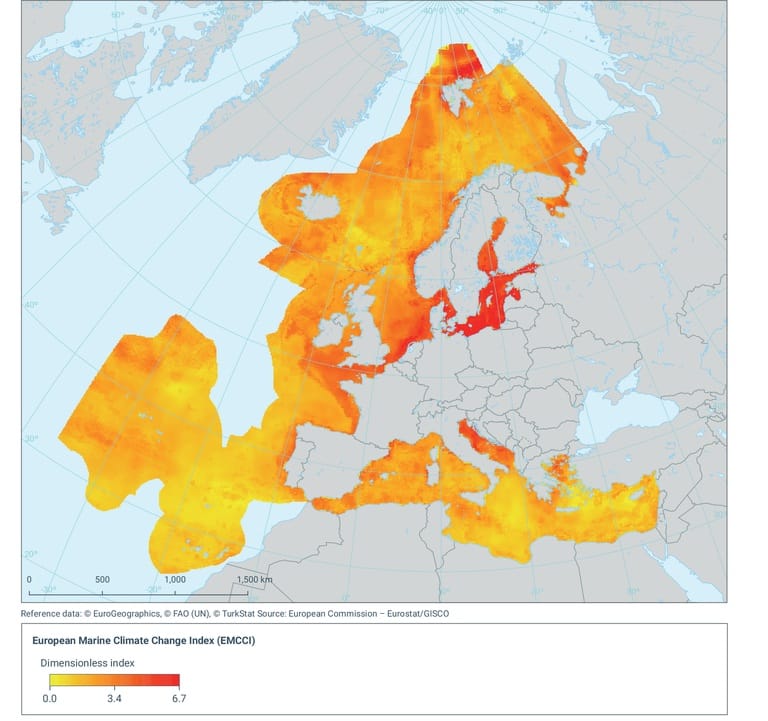
Climate change in the Adriatic Sea is becoming increasingly visible through warming waters, acidification, lower oxygen levels, and the arrival of invasive species. Although the Adriatic is small compared to open oceans, its semi-enclosed nature makes it especially vulnerable to global climatic shifts. In this article, we explore how climate change affects the Adriatic Sea, how Mediterranean fish populations are changing, what the latest research says, and how we can adapt to preserve sustainable fisheries.
🌡️ Climate Change in the Adriatic Sea and Its Impacts
The Adriatic Sea as a Semi-Enclosed Basin
The Adriatic Sea is a semi-enclosed marine basin, which makes it more sensitive to regional climate change than deeper oceanic environments. Limited water exchange with the open Mediterranean means that heat, pollution, and invasive species remain in the system longer, increasing the duration and severity of climate impacts.
The “Deadly Trio”: Warming, Acidification & Deoxygenation
Scientists highlight a combination known as the “deadly trio” of climate change in the Adriatic Sea:
- Rising sea temperatures
- Ocean acidification due to excess CO₂ absorption
- Deoxygenation (loss of dissolved oxygen)
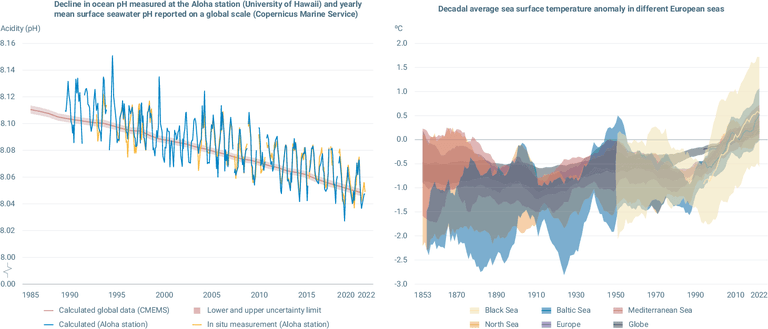
According to the European Environment Agency, the average global ocean surface temperature in 2011–2020 was 0.88°C higher than in pre-industrial times eea.europa.eu (EEA).
- Warmer waters accelerate fish metabolism
- Acidification lowers pH and damages shell-forming organisms
- Warmer water holds less oxygen, creating potential “dead zones” near the coast
This combination puts enormous pressure on marine ecosystems in the Adriatic.
🌡️ Evidence of Warming in the Adriatic Sea
Current Temperature Trends
Long-term measurements show that the temperature of the Adriatic Sea is increasing by approximately 0.03°C per year. This continuous warming is part of a wider process called Mediterranean tropicalization, where warm currents stay longer in the region and permanently change habitat structures.
Future Projections
IPCC projections show that in the Eastern Adriatic, sea surface temperature may rise up to 5°C by the end of the 21st century. Precipitation patterns are also expected to shift:
- More rainfall in winter
- Up to 20% less rainfall in summer
Such changes impact not only the sea but also coastal landscapes, agriculture, and freshwater systems across the Balkans.
🎣 Consequences for Habitats and Fish Populations
Climate change in the Adriatic Sea has already reduced habitat suitability for many fish species. Some studies estimate:
- Up to 50% loss of suitable habitat
- Catches decreased by 13.5% to 86.9% depending on species
As a result:
- Traditional species such as seabream (orada) and seabass (brancin) may shift to cooler waters
- Tropical species increasingly occupy their ecological niches
👉 Read more: Winter Shore Fishing – Techniques, Best Baits & Target Species
🐟 How Marine Ecosystems and Fish Stocks Are Changing
Metabolic Stress and Physiological Changes
Warmer waters accelerate the metabolism of fish, increasing oxygen demand and impacting growth patterns. Some species reach maturity earlier but become more vulnerable to disease and heat stress. During extreme summer temperatures, mass mortality events may occur, especially during marine heatwaves.
Habitat Loss and Migration
Acidification and oxygen loss damage seagrass beds, corals, and benthic organisms — the foundation of the marine food chain. Many species migrate northwards or move into deeper waters to find optimal conditions, making Mediterranean fish stocks more unstable.
🐠 Invasive Species Driven by Climate Change
Why Invasive Species Are Increasing
One of the most noticeable effects of climate change in the Adriatic Sea is the spread of warm-water invasive species. Higher temperatures create ideal conditions for tropical organisms that previously could not survive here.
Two main pathways introduce these species:
- Lessepsian migration through the Suez Canal
- Ballast water discharge from large ships
Marine biologists from the Institute of Marine Biology in Kotor consider their presence a strong “bioindicator” of warming waters.
Examples of New Invasive Species
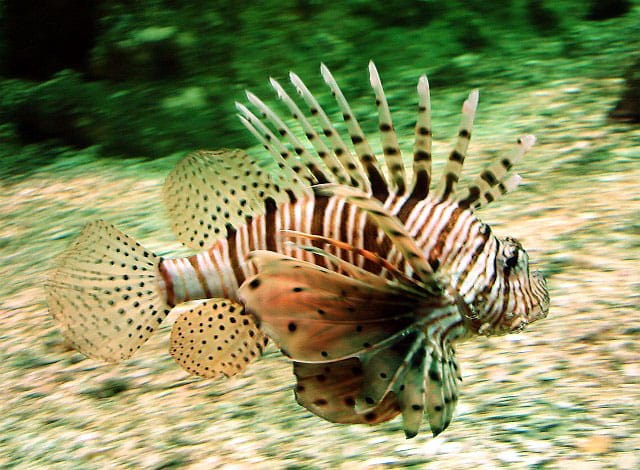
1. Lionfish (Pterois miles)
Highly venomous predator originally from the Red Sea. Its appearance in the Adriatic confirms significant warming.
👉 Read more: Lionfish in the Adriatic – Threat to Divers and Fishermen
2. Marbled Spinefoot (Siganus rivulatus)
First recorded in 2010. Competes with native herbivorous fish and alters algal communities.
3. Mnemiopsis leidyi (comb jelly)
Introduced via ballast water; destroys anchovy and sardine larvae, threatening local fisheries.
By 2013, researchers identified 113 non-native species in the Eastern Adriatic, including 22 fish species, and the number continues to rise.
⚠️ Impact on Biodiversity and Fisheries
Invasive species don’t just occupy space — they actively displace native species.
- Lionfish consume large amounts of juvenile fish and crustaceans
- Marbled spinefoot competes with local herbivores
- Comb jelly reduces populations of small pelagic fish
Some regions recorded over 80% decline in native species after lionfish expansion.
Economically, invasive species reduce catches and affect the income of local fishermen. They also pose safety risks to tourists because of venomous spines or toxins.
🛡️ Adaptation and Management Measures
Monitoring and Early Detection
Protecting the Adriatic’s biodiversity requires strong monitoring and early-warning systems. Researchers warn that Eastern Adriatic countries still lack coordinated policies for identifying invasive species.
Policies & Cross-Border Cooperation
Key measures include:
- Control of ballast water
- Stricter vessel inspections
- Better regulation of aquaculture
- Regional data-sharing programs
Since invasive species ignore national borders, coordinated management is essential.
Sustainable Fishing & Public Awareness
Education is crucial — for both fishermen and the general public. Sustainable fishing practices, quota respect, and selective gear can reduce ecological pressure. Some invasive species, such as lionfish, can even be used as new fisheries resources through targeted harvesting.
✅ Conclusion
Climate change in the Adriatic Sea is already reshaping the Mediterranean marine environment. Rising temperatures, acidification, oxygen decline, and invasive species are altering habitats, reducing native fish populations, and destabilizing fisheries.
However, through monitoring, cooperation, sustainable fishing, and public education, many negative impacts can be mitigated. The Adriatic may not avoid climate change — but with the right measures, we can protect its unique marine heritage.
For detailed scientific data, see the official report by the European Environment Agency (EEA).
Read more: 👉 Healthy Fish of the Adriatic Sea
Join the Kotor Fisherman Community 🎣
If you love fishing and want to receive tips, techniques, and stories about Adriatic fishing — subscribe to our free newsletter!
We share new fishing advice or stories from the coast of Montenegro and beyond.
📩 Sign up here: Newsletter Subscription
🎣 Share your fishing stories, photos, and videos!
We’ll feature the most interesting catches on our blog or social media — with your name or nickname.
📩 Send them via our contact profiles below or directly to newsletter@kotorfisherman.com