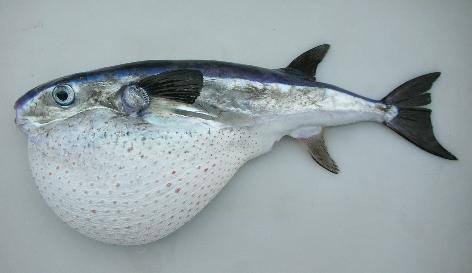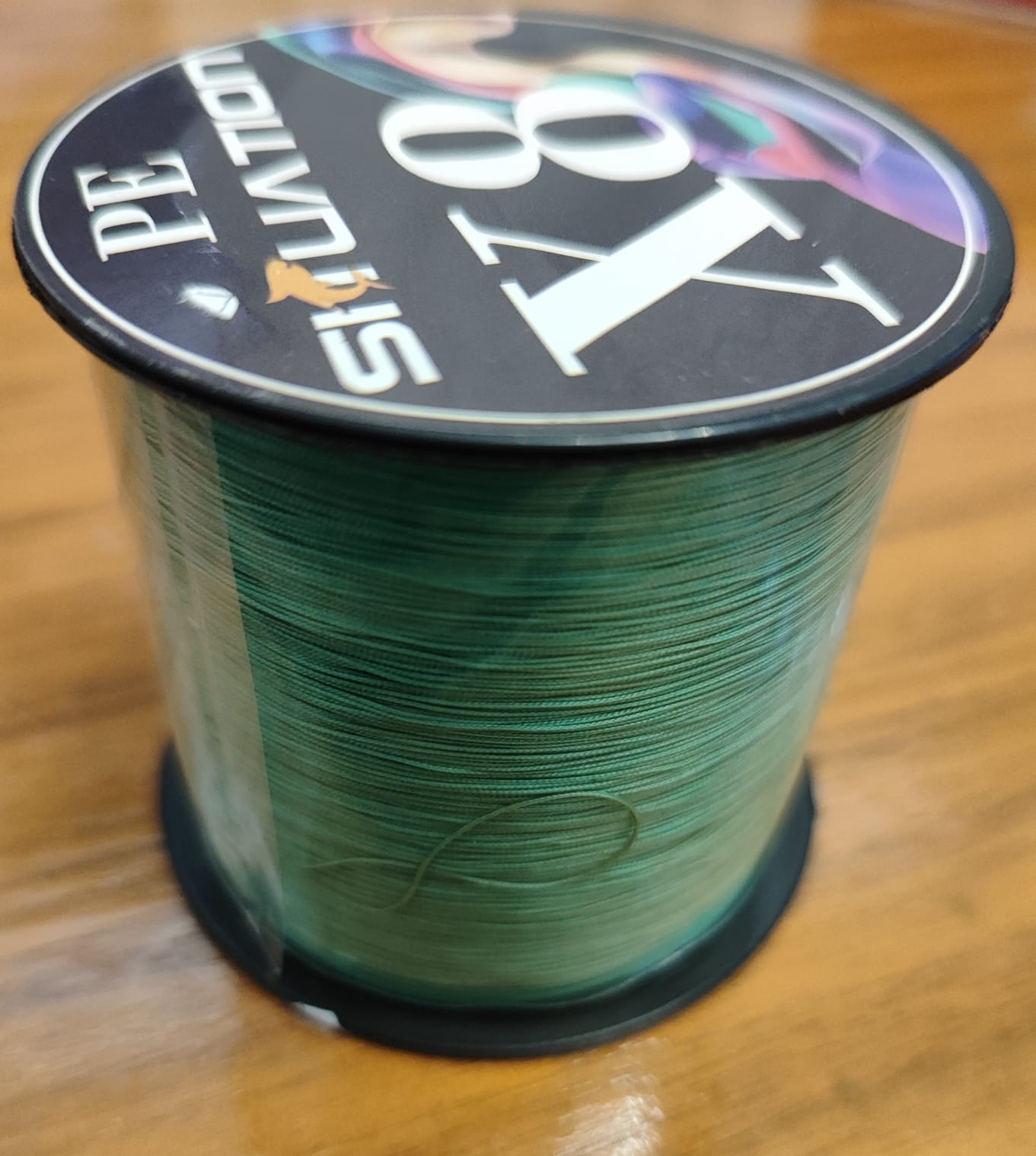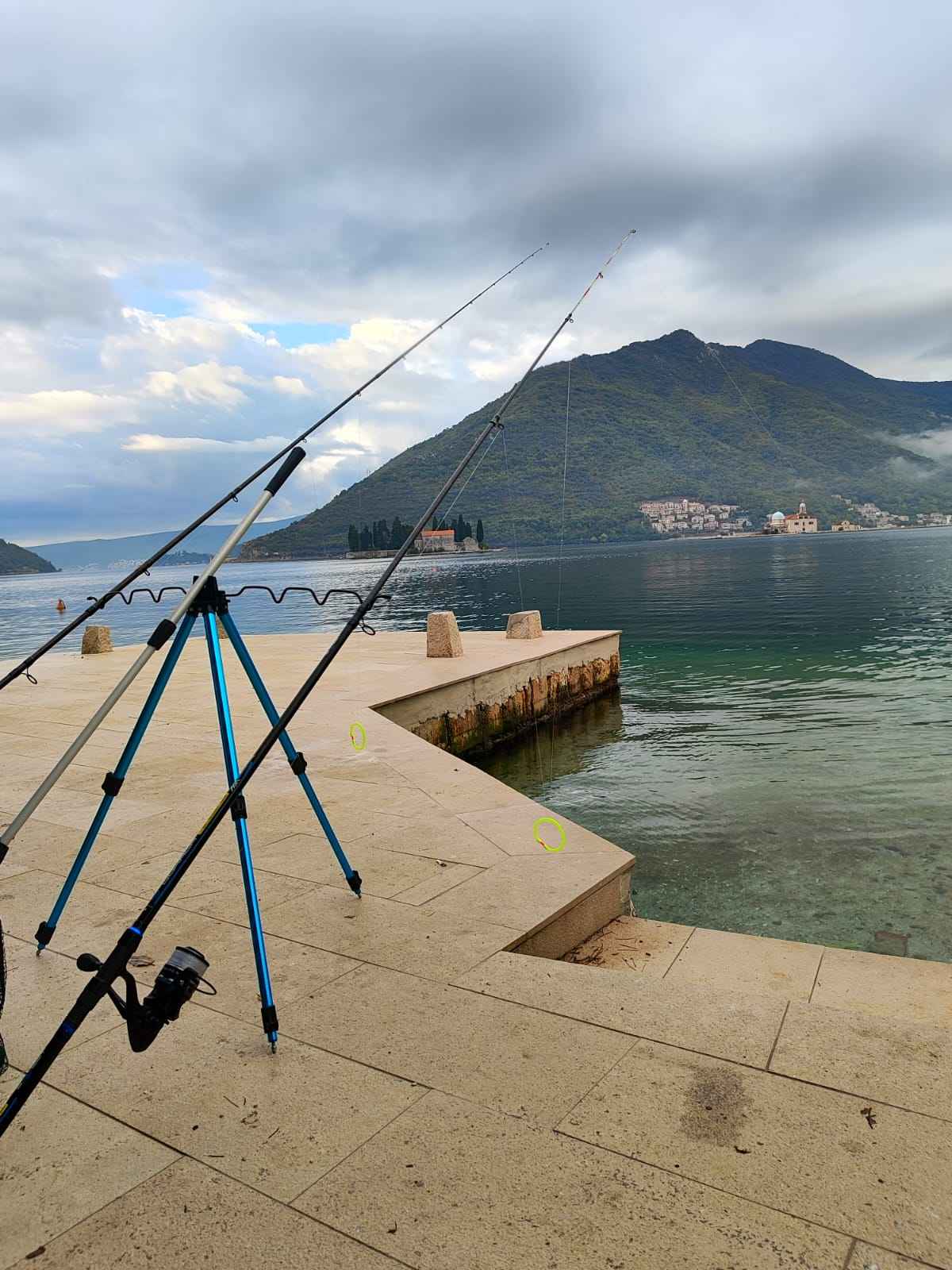
Winter shore fishing can be just as exciting as summer trips, but it requires deeper knowledge of fish behavior and sea conditions. Fishing during the colder months means facing lower temperatures, calm or unpredictable seas, and fish that retreat to deeper, more stable areas. That’s why proper preparation, suitable gear, and choosing the right location are key to success. In this guide, we’ll explain how to catch sea bream and white seabream, how to actively lure sea bass, which baits work best, and how to adjust your tactics for winter shore fishing.
Why Winter Shore Fishing Can Be Great
Even though the sea may seem lifeless during winter, many prized species stay close to the coast, especially near ports, harbors, and rocky areas where food drifts in from the land.
Sea bream gather in small groups before spawning and actively feed on rocky or shell-covered bottoms. White seabream form smaller schools near collapsed rocks and cracks that serve as hiding places.
Sea bass, unlike most coastal species, remains in the same areas as in autumn — often in shallow waters of two to three meters. Because food is scarce, predators become less selective and react aggressively to well-presented baits, making winter shore fishing surprisingly productive.
Choosing the Right Location
In cold water, micro-locations matter the most.
For sea bream, choose transitions between rocky and sandy bottoms at depths of 12–20 meters. These spots may be only 30–100 meters from the shore.
White seabream prefer rocky slopes, boulder fields, and cracks between stones — from 2 to 20 meters deep, sometimes even more.
Sea bass thrives around harbors and piers where small fish gather, as well as in areas where the current runs close to the coast. River mouths, narrow channels between islands, and areas with strong tidal flow are excellent for lure fishing.
Southern wind and rain often trigger feeding frenzies, so fishing during these conditions or around high tide can be especially successful. Sea bream and sea bass are most active about 90 minutes before and after the peak of the tide.
Target Species: Sea Bream and White Seabream
In winter, sea bream (Sparus aurata) move to deeper waters over 5 meters.
The best terrains are sandy-gravel bottoms mixed with rocks, exposed to strong currents up to 20 meters deep.
This “queen of the fish” has strong jaws and teeth adapted for crushing shells and snails, so choose firm baits such as whelk, large sea worm, mussel meat, sardine, or crab.
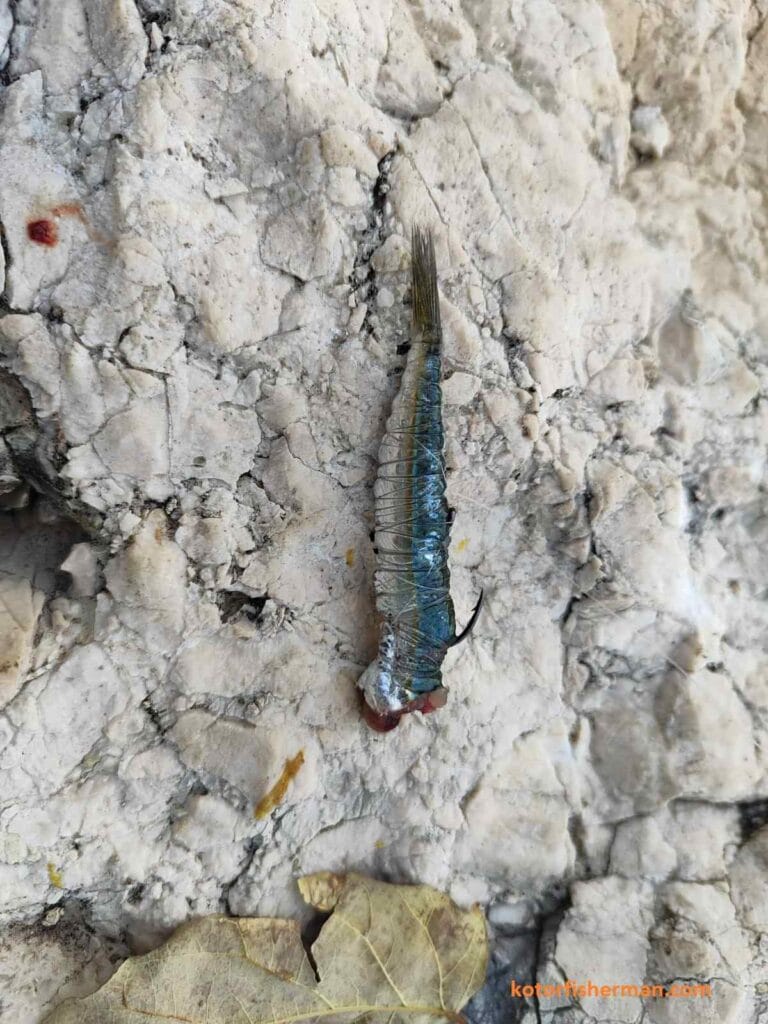
When using whelk, the shell can be cracked and only the meat mounted — its strong scent attracts fish from afar.
Use a rod 3–4 meters long, casting weight 60–120 g, with a main line 0.30–0.40 mm and fluorocarbon leader 0.28–0.35 mm.
A sliding sinker of 50 g keeps the rig steady at the bottom, followed by a bead, swivel, and a one-meter leader with a sharp hook. Make sure the hook tip remains exposed. After casting, keep the reel open and let the fish take a few meters of line freely before striking firmly.
Fishing on rocky bottoms can be frustrating because rigs often get snagged. To minimize losses, use a fluorocarbon leader with slightly lower breaking strength than the main line — this way only the hook section breaks, reducing both environmental impact and cost.
Sardine and Other Natural Baits
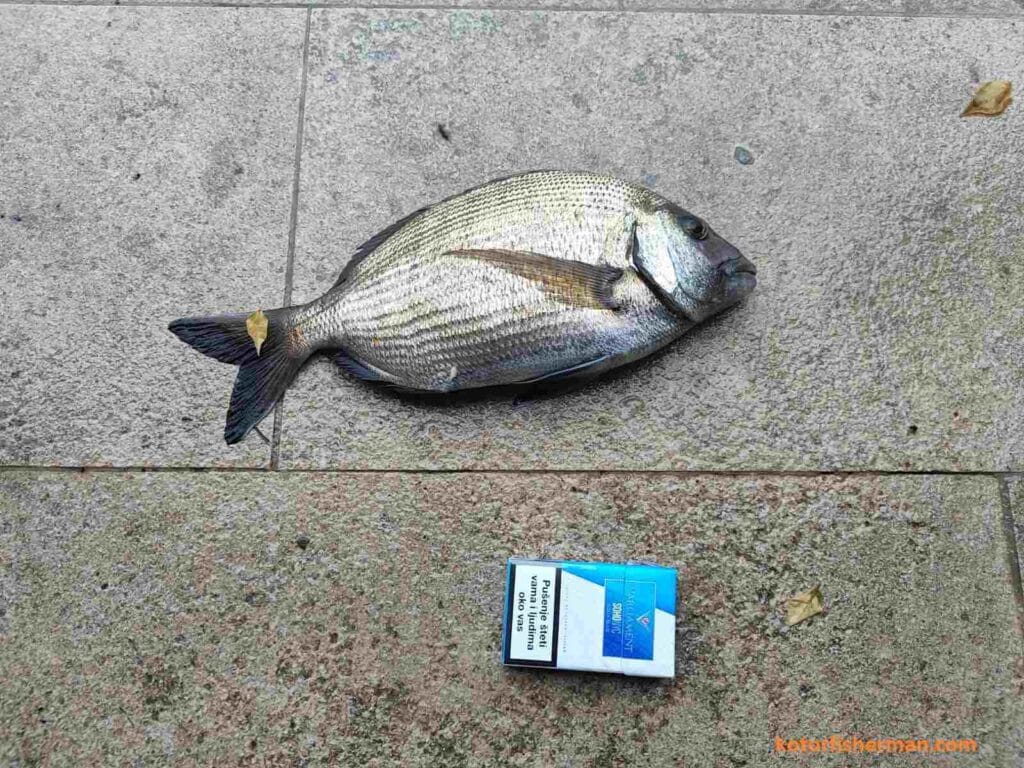
White seabream (Diplodus sargus sargus) belongs to the Sparidae family.
It can grow up to 47 cm and 2.5 kg, but the average catch is around 200 g.
It has an oval body with dark stripes and strong teeth used to crush sea urchins and shells.
They are social fish, often found in small groups, while larger specimens are solitary.
They live among rocks and boulders, hiding in crevices.
Fishing for them is best in autumn and winter, especially during windy days when waves crash against rocks and stir up food.
Use light gear — a 3.5–4 m rod, 0.25–0.30 mm main line, and fluorocarbon leader 0.20–0.25 mm. Hooks size 2–4 are ideal.
Classical technique includes groundbaiting — chopped mussels, sea urchins, sardines, and bread — to attract fish to one point.
Bait small pieces of worm, sardine, or mussel meat and drop them near the rocks into the foamy water.
When the sea is calm, fish further out; when it’s rough, fish right near the shore.
👉 Read more: Best Natural Baits for Sea Fishing
Active Winter Shore Fishing: Lure Fishing for Sea Bass
Sea bass (Dicentrarchus labrax) is one of the most exciting coastal predators.
Its torpedo-shaped body and strong jaws allow it to hunt small fish in shallow water.
It can grow over 1 meter and 12 kg (some reports say even 16 kg), but typical catches are 0.5–1 kg.
In winter, sea bass stays near the coast in 2–3 m depth, hunting small prey like sand smelt and anchovy.
Because of scarce food and upcoming spawning, it strikes more boldly — making winter shore fishing for sea bass especially thrilling.
Best Spots and Time
Look for sea bass around piers, harbors, bridges, and river mouths — anywhere with current and baitfish.
Shallow bays where the current brushes the shoreline and areas where freshwater meets saltwater are top winter spots.
The best time to fish is at dawn or dusk, and during moonless nights when the sea is slightly murky.
Daytime fishing is also productive if wind and waves stir up the water.
👉 See also: Lures for Adriatic Sea Fishing – Complete Guide
Gear, Safety & Ethics
Winter shore fishing requires good planning and safety awareness.
Wear non-slip waterproof boots and warm clothing — you’ll often be standing on slippery rocks exposed to wind and waves.
Always keep an eye on the tide and carry a headlamp with spare batteries for night sessions.
Fishing can last for hours, so bring a thermos with a hot drink and keep baits cool.
Never leave litter behind — take unused bait and packaging back with you.
Follow local fishing regulations, respect closed seasons and minimum size limits, and keep only what you need.
Both sea bream and white seabream play an important ecological role, so release smaller specimens to allow natural reproduction.
Conclusion
Although cold months discourage many anglers, winter shore fishing offers unforgettable moments.
With some research, understanding of species behavior, and proper equipment, even trophy catches are possible.
Passive bottom fishing with natural baits such as whelk or mussel meat can yield impressive results, while active lure fishing for sea bass brings adrenaline-filled fights in shallow winter waters.
👉 Also read: Cephalopods of the Adriatic Sea
Join the Kotor Fisherman Community 🎣
If you love fishing and want to receive tips, techniques, and stories about Adriatic fishing — subscribe to our free newsletter!
We share new fishing advice or stories from the coast of Montenegro and beyond.
📩 Sign up here: Newsletter Subscription
🎣 Share your fishing stories, photos, and videos!
We’ll feature the most interesting catches on our blog or social media — with your name or nickname.
📩 Send them via our contact profiles below or directly to newsletter@kotorfisherman.com