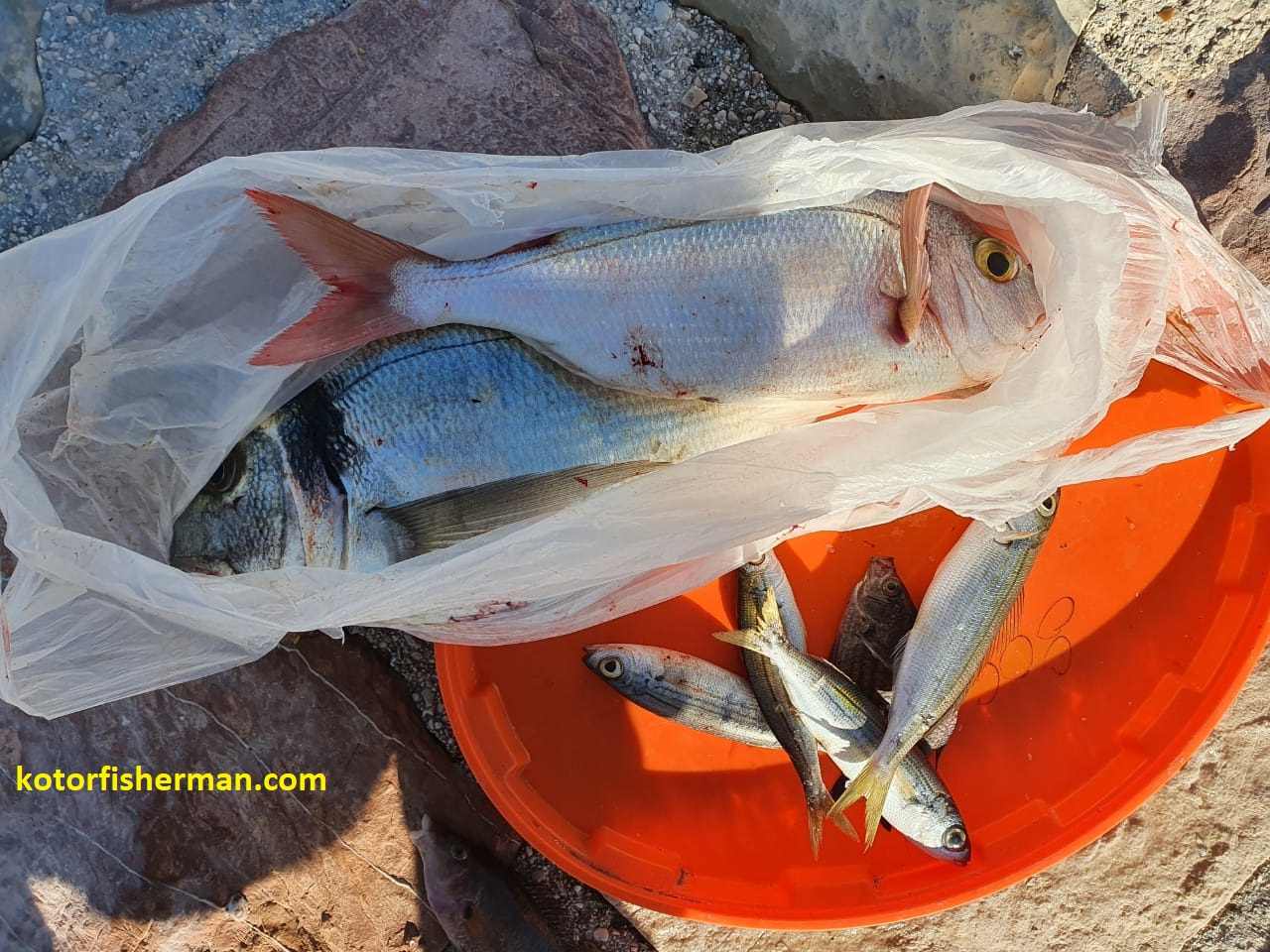
When we think of the Adriatic Sea, the first association is often oily fish such as mackerel, sardine, or bonito. However, whitefish (light, lean-fleshed species) hold a special place in both traditional fishing and Mediterranean cuisine. These species usually live close to the seabed or in mid-water, feed on benthos (organisms living on the sea floor, such as crabs, worms, and shellfish) or small fish, and represent an important catch for commercial and recreational fishermen.
In this guide we present eight of the most popular whitefish species in the Adriatic, describe their habitats and depths, and explain fishing techniques that increase your chances of success.
Most Popular Species and How to Catch Them
| Species | Habitat & Depth | Fishing Notes |
|---|---|---|
| European hake (Merluccius merluccius) | Widespread in the Adriatic, most common at depths of 100–200 m on sandy or muddy bottoms, but can be found down to 800 m. | Caught with bottom longlines or trawls. More active at night – rests on the seabed during the day, rises to mid-water at night. |
| European seabass (Dicentrarchus labrax) | Shallow coastal zones, river mouths, lagoons. | We have already written about seabass fishing techniques, you can read more here: How to Catch Seabass – Best Techniques, Baits and Tips |
| Gilthead seabream (Sparus aurata) | Seagrass meadows and sandy bottoms down to 30 m, adults can go to 150 m. In spring enters lagoons and estuaries. | Best fished near mussel farms and fish farms, at 30–50 m distance. Baits: shellfish, worms, crabs, squid pieces. |
| Red scorpionfish (Scorpaena scrofa) | Rocky and algae-covered bottoms, often hiding motionless in shelters. | Feeds on benthos and small fish. Caught by longlines or in nets. Careful: venomous spines. |
| Bogue (Boops boops) | Forms schools on varied bottoms (sand, mud, rocks, algae). At night moves closer to the surface. | Fished with small hooks and bread or dough baits. Abundant nearshore; also used as bait for predators. |
| Monkfish / anglerfish (Lophius piscatorius) | Sandy/muddy bottoms from 20 m to 1,000 m. Lies half-buried, uses head lure to attract prey. | Usually caught by trawlers or longlines. Recreational catches are rare; requires big baits (cuttlefish) and heavy tackle. |
| Common dentex (Dentex dentex) | Deep rocky areas, especially offshore cliffs. In late summer/early autumn comes closer to shore. | Top predator. And you can read more about it in our dedicated article: Dentex Fishing – Season and Applicable Techniques |
| Common sole (Solea solea) | Sandy/muddy seabeds at 10–60 m, deeper in winter. Juveniles stay in shallow bays for several years. | Mostly fished at night with sensitive tackle. Baits: marine worms or small crabs. |
European hake
European hake is the most important commercial whitefish in the Adriatic. It occurs from shallow areas to great depths, but the richest catches are between 100–200 m on sandy and muddy bottoms. During the day it lies on the seabed, while at night it rises towards mid-water. Industrial fishing uses trawlers, while recreational anglers rely on longlines with natural baits such as fish fillets or squid strips.
European seabass
Seabass is often called the “king of the shallows.” It inhabits coastal zones, lagoons, and river mouths, and can reach up to one meter in length. Most active at dawn and dusk, with autumn and winter being the peak seasons. Anglers target seabass near river mouths, harbors, piers, sandy beaches, and mixed bottoms.
- Natural baits: live/fresh fish (mullet, garfish), shrimp, crabs.
- Artificial lures: soft plastics and wobblers, especially effective when the water is cloudy after rainfall.
Gilthead seabream
The gilthead seabream lives on seagrass meadows and sandy bottoms down to about 30 m, although adult specimens can reach depths of up to 150 m. In spring it enters estuaries and lagoons, where it feeds on shellfish and crabs.
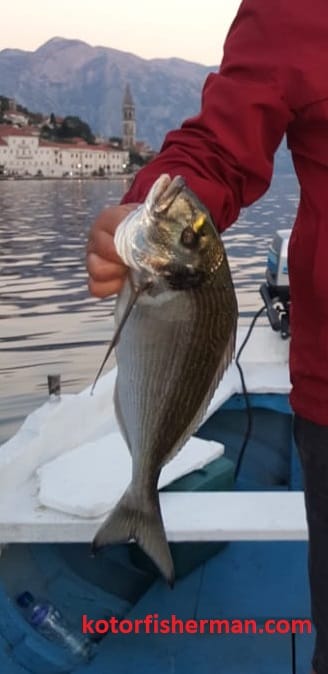
Recreational anglers often fish near mussel farms, where seabream feed on leftovers. It is best to position yourself 30–50 m away from the farm to avoid disturbance. Recommended baits include mussels, marine worms, crabs, or squid.
Red scorpionfish
The red scorpionfish is one of the Adriatic’s most iconic whitefish, highly prized in Mediterranean cuisine. Its irregular, spiny body with reddish-brown tones makes it perfectly camouflaged against rocky bottoms. Usually 20–40 cm long, though larger specimens exceed 2 kg.
It is mostly found around rocky reefs and seagrass, feeding on benthos and small fish. Anglers catch it with bottom longlines or nets. Caution: venomous spines require careful handling.
Bogue
The bogue is a smaller but abundant whitefish species of the Adriatic. It inhabits continental shelves and coastal zones over sand, mud, rocks, and seagrass. Schools rise towards the surface at night.
Anglers catch bogue with light tackle and small hooks, using bread or dough as bait. It is also commonly used as live or cut bait for larger predators.
Monkfish
Monkfish, also called anglerfish, has a huge head and wide mouth. It lives on sandy or muddy bottoms from 20 m to 1,000 m, lying half-buried and using its head lure to ambush prey.
Professional fishermen catch it with trawls or deep longlines. Recreational catches are rare but possible with heavy gear and large baits like cuttlefish. Its tough jaw requires strong hooks and patience.
Common dentex
The common dentex is among the most prestigious whitefish of the Adriatic. With a powerful body and large teeth, it often grows to 30–70 cm, though some exceed 1 m and 10 kg.
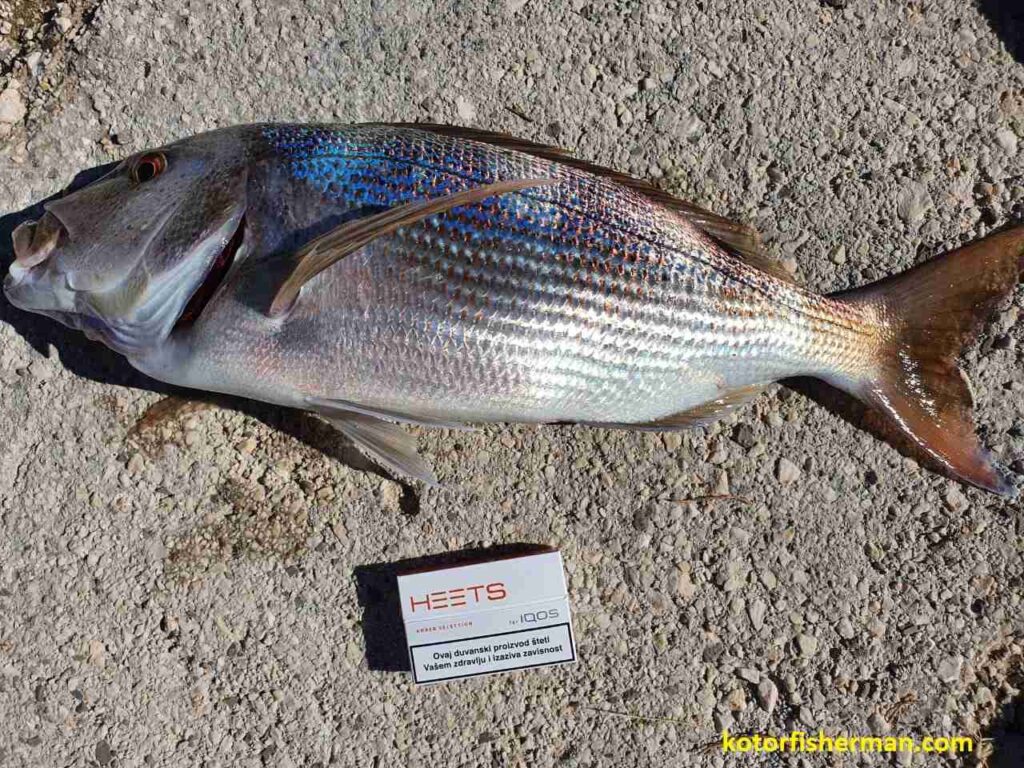
It inhabits deeper rocky areas but moves closer to shore in late summer and autumn. As a top predator, it feeds on fish, cephalopods, and crabs. Dentex is most often caught by trolling with live squid or vertical jigging.
Common sole
The sole is a typical bottom-dwelling whitefish. Adults bury themselves in sandy or muddy substrates at 10–60 m, migrating deeper in winter. Juveniles remain in shallow bays for their first years.
Fishing for sole is usually done at night. Sensitive rods and fine lines are necessary to detect its delicate bite. Best baits are marine worms (e.g., Korean worm) and small crabs.

Whitefish of the Adriatic are a true treasure. From the deep-sea hake and mysterious monkfish to the cunning seabass and royal seabream – each species offers a unique challenge and reward. Their common traits are tender white meat and a preference for seabed habitats.
For successful catches, it is essential to know the habitat, use the right tackle, and remain patient.
If you want more tips, check out our guides on [autumn bonito fishing in the Adriatic], [best fishing spots in Boka Bay], or [Lures for Fishing in the Adriatic – Everything You Need to Know]. This article is designed to help you understand the most important species and improve your fishing skills.
Join the Kotor Fisherman Community 🎣
If you love fishing and want to be the first to get new tips on techniques, species, and best Adriatic spots – subscribe to our free newsletter.
👉 Every new post you’ll receive a practical tip or story directly in your inbox.
🎣 Share your fishing stories, photos, and videos!
👉 Interesting submissions will be published on our blog or social media with your name or nickname.
📩 Send to: newsletter@kotorfisherman.com